Cats · original design
Cat Perler Bead Pattern
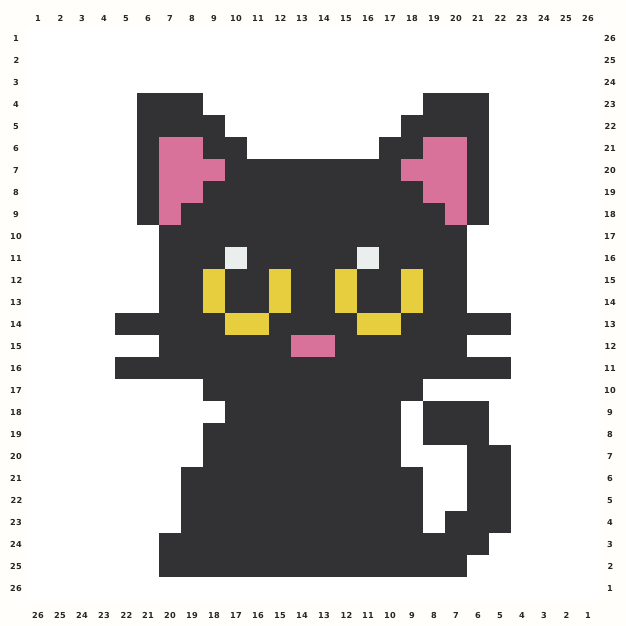
Build one original 29×29 tuxedo cat with pointed ears, a cream blaze and chest, gold eyes, coral collar, mint tag, separated paws and an open curled tail. All 479 beads fit one standard square board.
Edit this pattern online and export a PNG or print-ready PDF for free.
Free for personal & commercial use
No attribution required
Perler palette · codes hidden · closest screen-color matches
Beige cells are empty pegs; white cells are beads. Brand codes use the closest CIE76 screen-color match from this source palette. Check important shades against physical beads before building.
Perler bead material list
Exact per-color counts for the 29×29 grid, so you can sort cups before you start. Switch the brand above to remap codes, colors and totals on this page.
- Midnight
P201323 beads - Blush
P6315 beads - Toasted Marshmallow
P208121 beads - Yellow
P038 beads - Hot Coral
P5910 beads - Caribbean Sea
P2662 beads
Making notes
Place the paired ear tips and eye highlights before filling the dark silhouette. Use the two wide cream whisker rows to check the face, then close the collar and chest while leaving the gap inside the curled tail empty.
This 29×29 tuxedo-cat chart fits one square board. Its 479 occupied cells use six source roles; the editor remaps those roles into the selected manufacturer’s actual material codes.
Begin with the two pointed ears on rows 3–7, align the gold eyes and cream face on rows 8–14, then place the coral collar and mint tag before filling the chest, paws and curved tail. The small cream eye highlights and pink nose need exact cell placement. Do not fill the open channel between the right side of the body and its curled tail, and keep the two pale front paws separate.
Pattern layout and bead count
The complete chart is 29×29 with 479 occupied cells. It fits one standard square pegboard; the two blank rows at the top and the blank bottom row are intentional coordinate space, not missing beads. Checkpoints: Rows 3–7 contain two separate dark ear triangles with pink centers, not one joined stripe. Rows 8–14 align gold eyes, the cream blaze and two long cream whisker bands around the small pink nose. The coral collar spans ten occupied cells and the mint tag is a two-cell vertical detail below it. The right-side tail channel stays open while two cream front-paw cell groups remain distinct near the bottom.
Ways to customize this pattern
For a grey or midnight-blue coat, recolor the dark silhouette but preserve the light blaze, gold eyes and coral collar as distinct roles. Keep the open tail channel and pale paw tips readable after switching bead brands.
Count midnight body, cream markings, pink accents, coral collar, gold eyes and mint tag separately in the source chart. After a brand switch, use the live material list because multiple source roles can map to one manufacturer code.
Print and iron checklist
Ear tips, the collar tag and narrow tail join are more exposed than the broad body. Follow the selected bead manufacturer’s ironing instructions, use even passes, and cool the single board flat before lifting the cat. Before export, verify the 29×29 coordinates, 479-bead total and the selected brand’s merged color counts against the on-page material list.
Project ideas for Moonlight Tuxedo Cat
The one-board silhouette suits a small wall tile or framed bead piece. Support the pointed ears and open tail when transferring or mounting so the narrow joins retain their shape.
The source grid uses K and the other design symbols only as internal color roles. The interactive chart replaces them with the selected manufacturer codes, while its material list combines any roles that map to the same bead color.
Original design · Open use
Original design & CC0 license
Free to use for any purpose. Created by mybeadpattern.
- Design
- Original mybeadpattern design
- License
- CC0 1.0 Universal
- Commercial use
- Permitted, including sales
- Attribution
- Not required; credit is optional
This original Moonlight Tuxedo Cat pattern, its square-grid data, chart images and previews are released under CC0 1.0 Universal.
You may use, copy, modify, publish, redistribute and sell this pattern for any purpose worldwide, including commercial use. Selling pattern files, modified versions and finished bead creations is permitted. No attribution, payment or additional permission is required.
This dedication covers the Moonlight Tuxedo Cat pattern and its pattern assets, to the extent of copyright and related rights we hold. Other designs keep their own rights notices. Website code and text, manufacturer names, trademarks and third-party palette data are separate from this dedication. The work is supplied as-is without warranties.
CC0 is an irrevocable public-domain dedication, not a requirement to credit mybeadpattern.
Read the full CC0 legal code. Terms of Use govern the service, and our Privacy Policy explains data handling.
More patterns like this
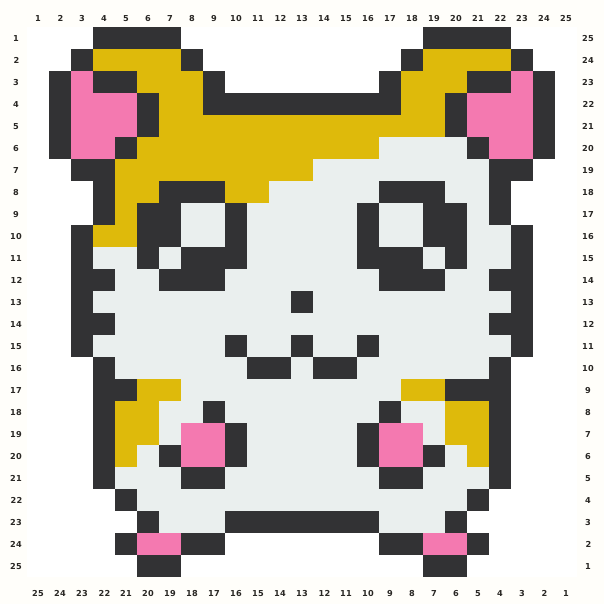 HamsterShared motif: pets
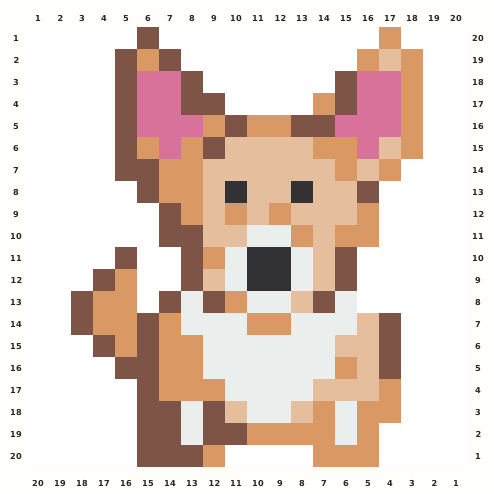 Happy CorgiShared motif: pets
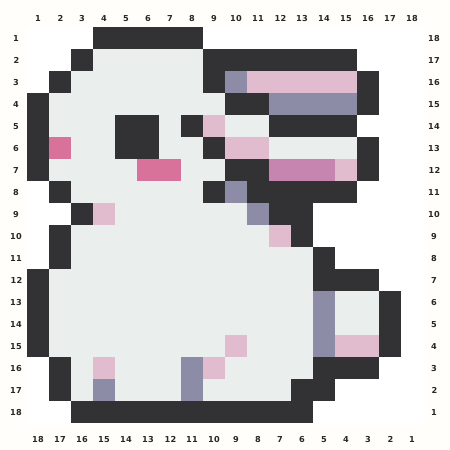 Pink-ear BunnyShared motif: pets
 Tiger FaceShared motif: felines
For a larger four-board animal project, try the 58×58 chestnut horse pattern.