Animals · reference rebuild
Tiger Perler Bead Pattern
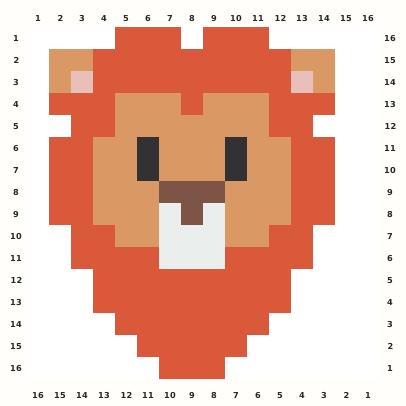
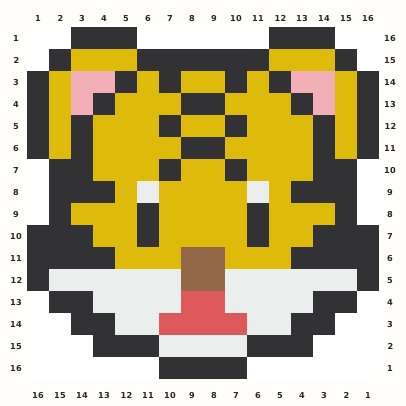
A compact tiger face pairs gold fur, black stripe breaks, pale eyes, a brown nose and small rose mouth accents.
Edit this pattern online and export a PNG or print-ready PDF for free.
Perler palette · codes hidden · closest screen-color matches
Beige cells are empty pegs; white cells are beads. Brand codes use the closest CIE76 screen-color match from this source palette. Check important shades against physical beads before building.
Perler bead material list
Exact per-color counts for the 16×16 grid, so you can sort cups before you start. Switch the brand above to remap codes, colors and totals on this page.
- Black
P1890 beads - Sunflower
P26878 beads - Flamingo
P2036 beads - White
P0130 beads - Light Brown
P214 beads - Hot Coral
P596 beads
Making notes
Use the two ear peaks and central brow as anchors for this compact face. The broad gold field hides several black stripe steps, while the brown nose and six rose cells sit low in the pale muzzle; count them independently.
This page gives makers a compact tiger face Perler bead pattern with strong eyes, cheek stripes, ears and a centered muzzle. The 16×16 square keeps the expression legible at small scale and can be recolored without introducing a named character or team mark.
Frame both ears and the outer black face first, then fill the gold forehead and cheek planes from the center outward. Place the pale eye and muzzle fields, add the brown nose and pink mouth accents, and finish by checking both lower cheek edges. The two ears mirror broadly but the interior stripe steps change from row to row. Keep the central black brow breaks, the paired pale eye lanes and the two pink lower accents in their recorded positions; do not smooth the stepped cheek outline into a circle.
Pattern layout and bead count
The selected chart is already a 16×16 square and contains 214 occupied cells. No occupied cell is cropped or padded; all sixteen rows and columns remain in the editor and the design fits one standard 29×29 board. Checkpoints: Rows 1–3: verify both black ear crowns, gold inner steps and the pale upper face before filling the brow. Rows 4–10: compare the paired eye lanes and stepped cheek stripes; the central black breaks remain intentional. Rows 11–13: count the brown nose and pink mouth cells independently from the white muzzle field. Rows 14–16: retain the lower black taper and centered jaw cap without closing the small pale openings.
Ways to customize this pattern
A cool silver-and-charcoal tiger or a copper-and-ivory version can change the mood without changing the face. Keep the black stripe hierarchy, pale muzzle and isolated rose mouth marks separate so the expression survives a Brand swap.
Gold Fur accounts for 78 cells, Black Contour 90, White Muzzle 30, Rose Accents six, Light Brown Nose four and Blush Highlights six. Keep black as the darkest structure and separate the warm nose and pink details from the white face when remapping Brands.
Print and iron checklist
The gold field is dense and can spread into the thin black stripe channels. Use short passes over the ear peaks and stripes before heating the broad forehead, then cool flat so the lower mouth block stays centered between the cheek rails. Before export, verify the 16×16 coordinates, 214-bead total and the selected brand’s merged color counts against the on-page material list.
Project ideas for Tiger Face
This face tile fits a wildlife notebook, zoo-classroom marker, animal-party favor, desk magnet or jungle-themed display. Attach backing behind the forehead or lower cheek mass rather than a single ear tip, and keep any personal lettering outside the face matrix.
The source grid uses k and the other design symbols only as internal color roles. The interactive chart replaces them with the selected manufacturer codes, while its material list combines any roles that map to the same bead color.