Animals · reference rebuild
Hamster Perler Bead Pattern
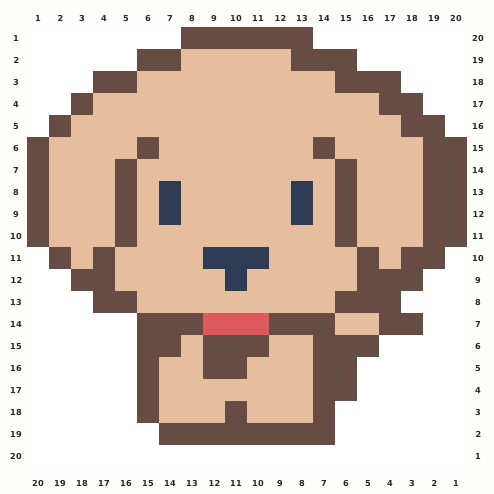
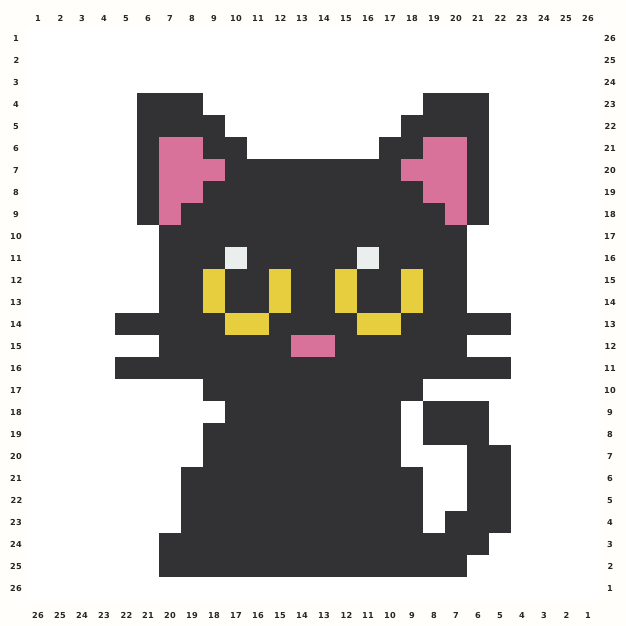
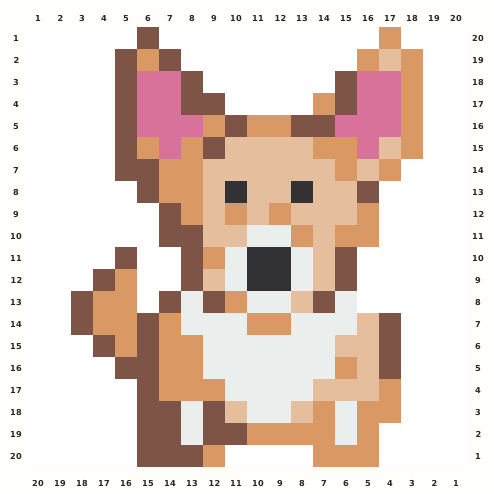
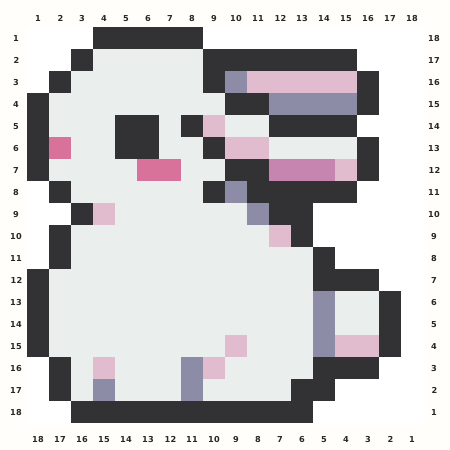
A rounded hamster portrait combines a dark ear-and-face outline, golden fur, pale muzzle panels and pink cheek details in a compact square chart.
Edit this pattern online and export a PNG or print-ready PDF for free.
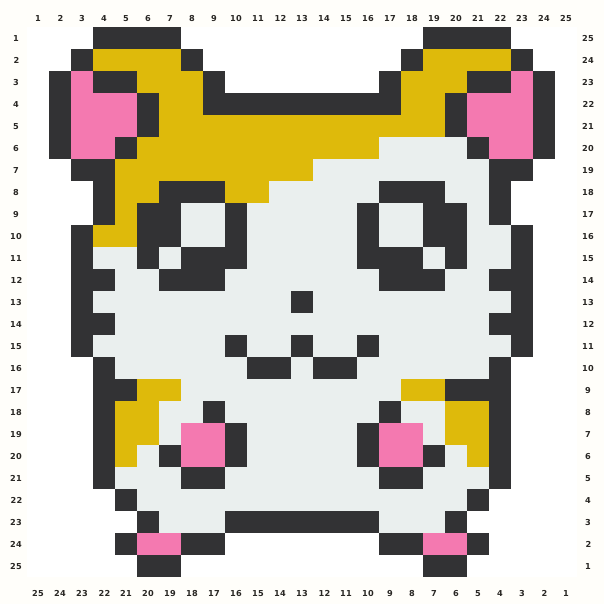
Perler palette · codes hidden · closest screen-color matches
Beige cells are empty pegs; white cells are beads. Brand codes use the closest CIE76 screen-color match from this source palette. Check important shades against physical beads before building.
Perler bead material list
Exact per-color counts for the 25×25 grid, so you can sort cups before you start. Switch the brand above to remap codes, colors and totals on this page.
- Black
P18153 beads - Sunflower
P26872 beads - Cotton Candy
P24230 beads - White
P01195 beads
Making notes
Anchor both ear caps and the dark forehead before filling gold fur and the long pale muzzle. Preserve the paired pink cheeks, asymmetric face openings and one blank column at each side of the centered 25×25 portrait.
This hamster Perler bead pattern is for makers who want a friendly small-pet portrait with ears, eyes, muzzle and cheek accents rather than an abstract animal icon. The 25×25 editable chart keeps 450 occupied cells inside a centered source frame that can be recolored and exported without tracing the reference image.
Begin with both pointed ear caps and the dark forehead rail, then fill the gold fur around the eyes. Add the pale muzzle fields row by row, place the black facial openings, and finish the pink cheek blocks and lower chin after the outer haunch contour has been counted from both sides. The source bounds are 23 columns by 25 rows and are centered with one blank column at each side. Preserve the bilateral ear tips, the asymmetrical dark cheek openings, the long pale lower muzzle and the final four-cell chin row; the side dots are intentional normalization padding, not white beads.
Pattern layout and bead count
The public source occupies 23×25 cells; I crop only the returned active bounds and add one blank column on the left and one on the right to create a 25×25 square. No occupied cell is scaled, mirrored or moved, and the 450-bead result fits one standard 29×29 board. Checkpoints: Rows 1–3: mirror the two dark ear caps and retain one blank normalization column on both sides of the centered 25×25 frame. Rows 4–6: verify the fullest upper face rows contain 23 occupied cells and keep both Y fur fields outside the pale f muzzle. Rows 13–20: recount the long f muzzle, dark k openings and paired h cheek accents before fusing the lower portrait. Rows 21–25: preserve the narrowing chin contour and final four-cell row; the complete normalized matrix contains 450 beads in four roles.
Ways to customize this pattern
Try cinnamon, cream or cool taupe for the fur while keeping the muzzle lighter than the outline. Preserve the ear points, pink cheeks and dark facial openings so the pet portrait does not become a generic square.
Pale f forms 195 muzzle and highlight beads, dark k supplies 153 structure cells, Gold Y contributes 72 fur cells, and pink h contributes 30 cheeks and ear details. Brand switching should preserve the light muzzle against the dark face while keeping the small h accents visible.
Print and iron checklist
The 450-cell portrait has broad pale areas next to thin dark ear and cheek edges. Fuse the ears and upper outline lightly before heating the muzzle, then work across the lower face in short passes. Let the outer pink corners cool under a flat sheet so they do not pull away from the heavier center. Before export, verify the 25×25 coordinates, 450-bead total and the selected brand’s merged color counts against the on-page material list.
Project ideas for Hamster
The compact portrait suits a pet-name plaque, classroom mammal card, cage-side enrichment sign or zipper-pull backing. Support the ear tips and cheeks during cooling, and place any label behind the solid muzzle rather than inside the 25×25 grid. Recolor Y for a different coat while leaving f, k and h roles distinct.
The source grid uses f and the other design symbols only as internal color roles. The interactive chart replaces them with the selected manufacturer codes, while its material list combines any roles that map to the same bead color.