food · reference rebuild
Watermelon Perler Bead Pattern
A curved watermelon wedge combines dark rind, olive inner rind, red and pink flesh, and four dark seeds.
Edit this pattern online and export a PNG or print-ready PDF for free.
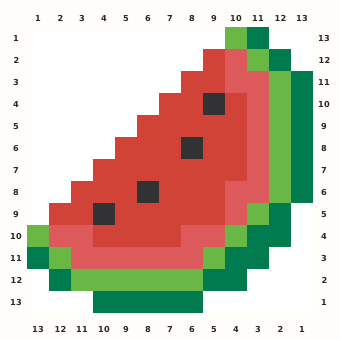
Perler palette · codes hidden · closest screen-color matches
Beige cells are empty pegs; white cells are beads. Brand codes use the closest CIE76 screen-color match from this source palette. Check important shades against physical beads before building.
Perler bead material list
Exact per-color counts for the 13×13 grid, so you can sort cups before you start. Switch the brand above to remap codes, colors and totals on this page.
- Kiwi Lime
P6119 beads - Dark Green
P1022 beads - Tomato
P21140 beads - Hot Coral
P5920 beads - Black
P184 beads
Making notes
Count the four seeds separately and keep the inner-rind green distinct from the dark border. The fruit touches every edge of the 13×13 square, so do not add padding.
Make the watermelon wedge by checking its rind bands before filling the flesh. Four dark seeds provide a quick final count against the red and pink areas. Keep the olive inner rind visible between the dark outer edge and fruit; it should not become a new yellow stripe during recoloring.
Lay the two-tone rind arc first, fill the red interior toward the pink highlight band, and place the four seeds last. Check the pointed ends before closing the broad center. Use row 10, the fullest row at 12 occupied positions, as a horizontal recount anchor. Every edge of the thirteen-cell square contains part of the fruit. Inner-rind green must stay separate from the dark border, and seed positions should not be symmetrized. Occupied bounds run from row 1 to row 13 and column 1 to column 13.
Pattern layout and bead count
The occupied motif measures 13×13 and is normalized to 13×13 with no normalization padding. No occupied cell is cropped, scaled, mirrored or moved. The 105-bead chart fits one standard 29×29 square pegboard. This framing protects the cucurbit rind geometry. Checkpoints: First occupied row 1: G C10, D C11. Confirm the cucurbit rind entry point. Fullest row 10 contains 12 occupied cells; compare its complete left-to-right sequence before fusing. Use it as the cucurbit rind span audit. Rarest role Dark Seeds occurs 4 times at R4C9, R6C8, R8C6, R9C4. Recheck this role beside the cucurbit rind landmark. Padding audit: no normalization padding; active bounds are R1–R13 and C1–C13. The cucurbit rind boundary must remain inside those limits.
Ways to customize this pattern
For an alternate edition, recolor Inner Rind Green, Dark Rind, Watermelon Red, Pink Flesh, Dark Seeds as separate value roles while leaving every occupied coordinate and 13×13 normalization unchanged. Keep the silhouette-specific landmarks and rare accents distinct at thumbnail size.
Sort the source roles as 19 Inner Rind Green, 22 Dark Rind, 40 Watermelon Red, 20 Pink Flesh, 4 Dark Seeds. Keep Dark Seeds distinct even though it contributes only 4 cells; Brand remapping should preserve the same light-to-dark hierarchy and never merge an occupied role with background.
Print and iron checklist
The flesh forms a broad heat reservoir beside narrow rind tips. Use brief passes across the center, reduce pressure at both ends, and keep seed holes readable. Inspect narrow joints from the reverse before mounting or exporting a replacement chart. Before export, verify the 13×13 coordinates, 105-bead total and the selected brand’s merged color counts against the on-page material list.
Project ideas for Watermelon Slice
The wedge works as a picnic basket tag, summer math manipulative or produce-market magnet. A semicircular backing prevents the rind points from snagging. Keep labels, dates and explanatory text on a separate backing so the approved silhouette stays unchanged.
The source grid uses R and the other design symbols only as internal color roles. The interactive chart replaces them with the selected manufacturer codes, while its material list combines any roles that map to the same bead color.