nature · reference rebuild
Sunflower Perler Bead Pattern
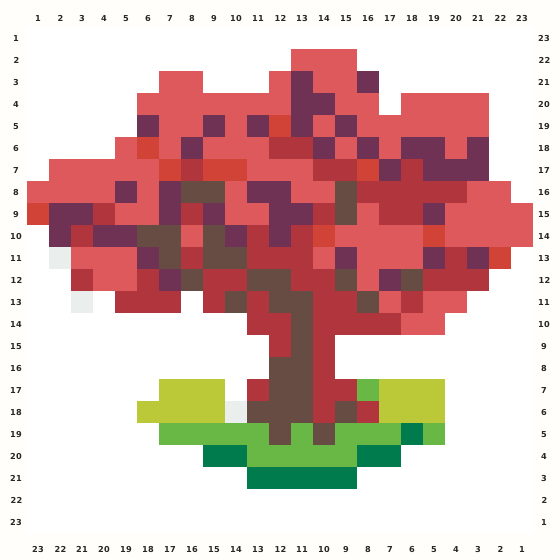
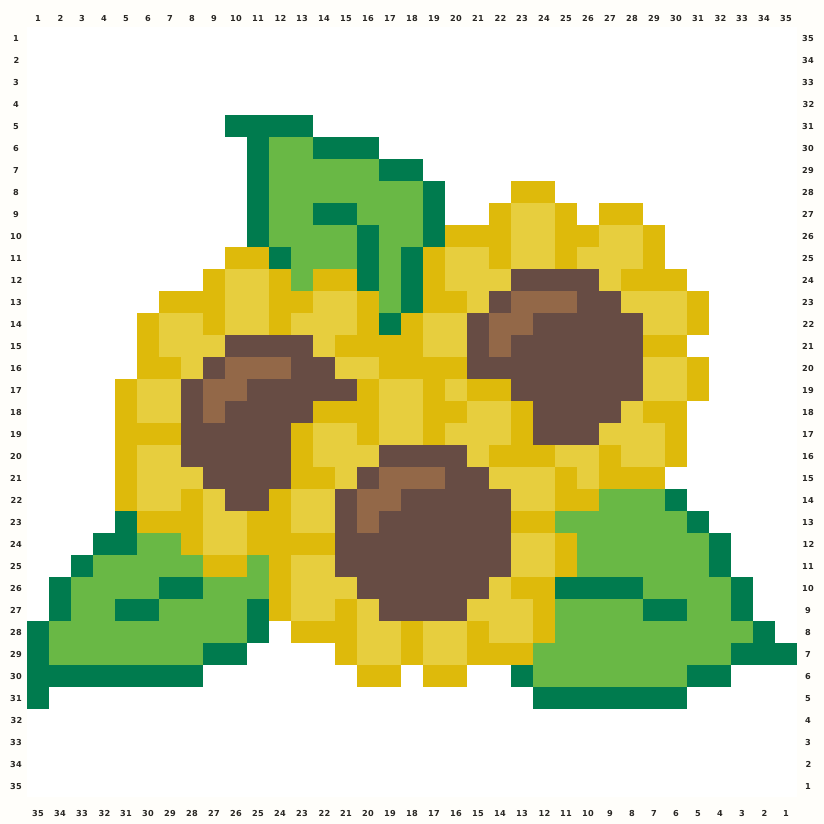
A three-bloom sunflower cluster uses two yellows, layered greens and warm brown centers across a broad connected-board chart.
Edit this pattern online and export a PNG or print-ready PDF for free.
Perler palette · codes hidden · closest screen-color matches
Beige cells are empty pegs; white cells are beads. Brand codes use the closest CIE76 screen-color match from this source palette. Check important shades against physical beads before building.
Perler bead material list
Exact per-color counts for the 35×35 grid, so you can sort cups before you start. Switch the brand above to remap codes, colors and totals on this page.
- Dark Green
P1078 beads - Kiwi Lime
P61125 beads - Sunflower
P268135 beads - Yellow
P03130 beads - Brown
P12121 beads - Light Brown
P2118 beads
Making notes
This 35×35 connected-board chart has three offset blooms, six retained color roles and eight blank normalization rows. Build the brown centers and narrow green leaves in board-sized sections before filling the broad yellow petals.
A maker searching for a sunflower Perler bead pattern needs a recognizable floral chart with petals, seed centers and leaves that can be followed cell by cell, recolored for a garden project and exported with an honest board plan. This clustered 35×35 rebuild preserves the public grid's three-bloom composition instead of flattening it into a generic yellow circle.
Begin on the normalized chart at row 5 with the dark-green leaf stem, then grow the three yellow-gold flower heads from their brown centers outward. Place the small amber transitions before closing each petal edge, add the bright-yellow field in connected rows, and finish the lower leaves and deep-green ground after the bloom spacing is stable. The three brown centers sit at different heights and the petal arcs are not a repeated stamp. Dark-green leaf edges cross the lower blossoms, while a few amber cells sit inside otherwise bright petals. Keep the four blank rows added above and below, and inspect the left and right edge leaves before assuming the cluster is mirrored.
Pattern layout and bead count
The three blooms occupy 35 columns and 27 rows inside a 35×35 square. Four blank rows sit above and four below. Connect two 29×29 boards across and two down, and retain the eight empty guide rows when exporting; cropping those margins changes the coordinate frame. Checkpoints: Rows 5–8: keep the dark-green stem and first yellow petal steps aligned after the four-row top padding. Rows 14–17: verify the three staggered brown seed centers and their amber transitions; they are intentionally not one repeated block. Rows 24–28: inspect the edge leaves and deep-green lower border before moving between connected boards. Rows 1–4 and 32–35: leave all eight normalization rows blank in the final 35×35 coordinate system. Board audit: confirm a 35×35 chart, 607 beads, six roles and a 2×2 connected-board plan.
Ways to customize this pattern
A late-summer version can move the gold role toward amber and the leaf roles toward olive, while a fresh spring edition can use lemon and mint. Keep both yellow values, both green depths and the two brown center roles separate so the three blooms do not collapse into flat circles.
Six source roles are retained from the raster grid: golden yellow, bright yellow, leaf green, deep green, dark brown and warm brown. The editable mapping keeps Y/I separate for two yellow values, G/D separate for leaf depth, and c/b separate for the seed centers and warm transitions. Preserve the gold-to-brown center contrast when switching Brands.
Print and iron checklist
This is the densest and widest chart in the batch. The narrow leaf tips, stepped petal points and several color changes around the seed centers can over-melt before the broad yellow zones. Work in connected board sections, use short passes on green tips, and let each joined-board section cool flat before moving it. Before export, verify the 35×35 coordinates, 607-bead total and the selected brand’s merged color counts against the on-page material list.
Project ideas for Sunflower Cluster
The 35×35 Sunflower Cluster is a connected-board wall panel, garden sign, seasonal window piece or classroom botany display rather than a one-board charm. Support the joins behind the broad yellow centers and lower leaves, and attach hanging hardware to a continuous green or brown region. The three blooms can label petal, ray, disc, sepal, stem and leaf without adding text to the chart.
The source grid uses Y and the other design symbols only as internal color roles. The interactive chart replaces them with the selected manufacturer codes, while its material list combines any roles that map to the same bead color.