nature · reference rebuild
Mushroom Perler Bead Pattern
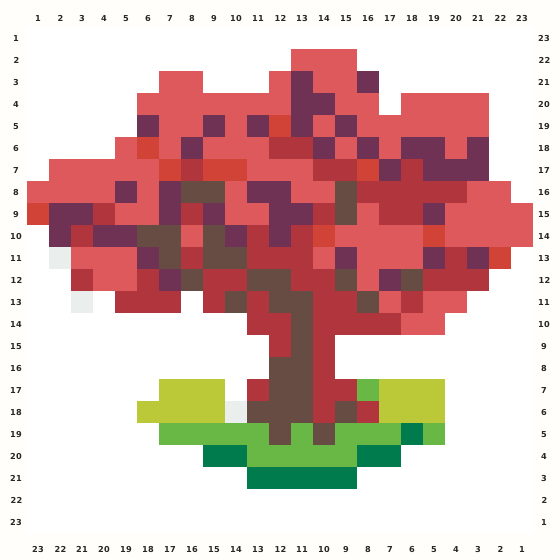
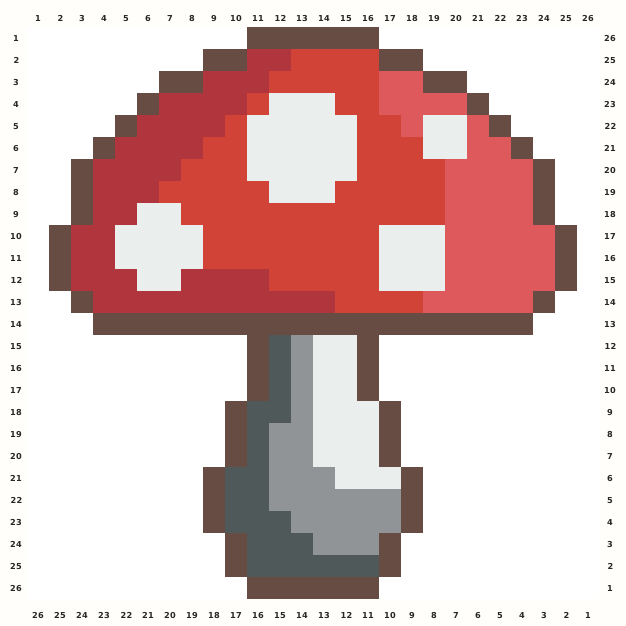
A broad red mushroom with four white spot clusters, dark-red left shading, a coral-lit cap edge, a brown contour and a white-to-grey stem.
Edit this pattern online and export a PNG or print-ready PDF for free.
Perler palette · codes hidden · closest screen-color matches
Beige cells are empty pegs; white cells are beads. Brand codes use the closest CIE76 screen-color match from this source palette. Check important shades against physical beads before building.
Perler bead material list
Exact per-color counts for the 26×26 grid, so you can sort cups before you start. Switch the brand above to remap codes, colors and totals on this page.
- Brown
P1282 beads - Red
P0548 beads - Tomato
P21174 beads - Hot Coral
P5942 beads - White
P0164 beads - Charcoal
P20723 beads - Grey
P1725 beads
Making notes
Use the six-bead crown and twenty-bead cap baseline as anchors before filling the four white spot clusters. Rows 10 and 11 repeat exactly; confirm that pair before stepping into the narrower shaded stem.
This chart serves makers looking for a mushroom Perler bead pattern with a complete cap and stem, enough shading to read as dimensional, and one checked grid that can be recolored, edited or exported instead of a decorative reference photo.
Start with the six-brown-bead crown on row 1, then widen the cap through its stepped brown contour while placing the dark-red left field, Tomato center and coral right edge. Lock the four white spot clusters before closing the twenty-bead cap baseline on row 14. Build the narrow stem from rows 15–17, widen its lower half gradually, and finish with the six-bead brown foot on row 26. Rows 10 and 11 repeat exactly, but the cap highlights are deliberately uneven: the large upper-center white patch, right rectangle and two lower patches do not mirror. The coral band belongs only on the right half, and every outer white cell is blank board rather than a White bead, so verify the brown contour before filling light regions.
Pattern layout and bead count
The selected reference uses a 29×29 chart with an occupied area 24 columns wide by 26 rows high. The editor keeps source rows 3–28 and columns 3–28, leaving one blank normalization column on each side of the 26×26 square; occupied cells span columns 2–25 and rows 1–26, so the full 358-bead motif fits one standard 29×29 Midi board. Checkpoints: Row 1: center exactly six Brown beads at columns 11–16 before widening the crown. Rows 10–11: confirm the two rows match cell for cell, including both lower white spot blocks. Row 14: count one uninterrupted twenty-bead Brown cap baseline from columns 4–23. Rows 15–17: repeat the six-cell Brown–Charcoal–Grey–White–White–Brown stem neck at columns 11–16. Row 26: close the tapered stem with six Brown beads at columns 11–16.
Ways to customize this pattern
For an autumn variant, keep the Brown contour and Grey stem but move Tomato toward rust and Hot Coral toward amber. A fantasy version can replace the two red fields with plum and violet; preserve the four asymmetric White spot clusters and the darker left-to-lighter right shading direction.
Brown defines the entire outline and cap baseline; Red and Tomato separate the shaded and central cap fields; Hot Coral creates the right-side highlight. White is occupied in both the cap spots and stem, while Charcoal and Grey model the stem shadow. Preserve the dark-to-light direction when changing brands even if two source roles merge to one manufacturer color.
Print and iron checklist
The cap is dense while the stem neck is only six beads wide, creating an abrupt heat-density change beneath row 14. Use short even passes around the stepped cap slopes, keep the isolated white spot corners open, and cool the broad top flat before lifting so the narrow brown uprights and tapered stem do not twist away from the cap. Before export, verify the 26×26 coordinates, 358-bead total and the selected brand’s merged color counts against the on-page material list.
Project ideas for Red Mushroom
The 26×26 mushroom suits a woodland window hanging, autumn plaque, garland motif, or framed color study. Center hanging hardware above the solid cap or attach it to a backing, not through a white spot or the narrow stem neck. Before mounting, verify both repeated rows 10–11, the twenty-bead cap baseline, six-cell stem neck, and six-bead bottom row.
The source grid uses c and the other design symbols only as internal color roles. The interactive chart replaces them with the selected manufacturer codes, while its material list combines any roles that map to the same bead color.