Nature · reference rebuild
Ladybug Perler Bead Pattern
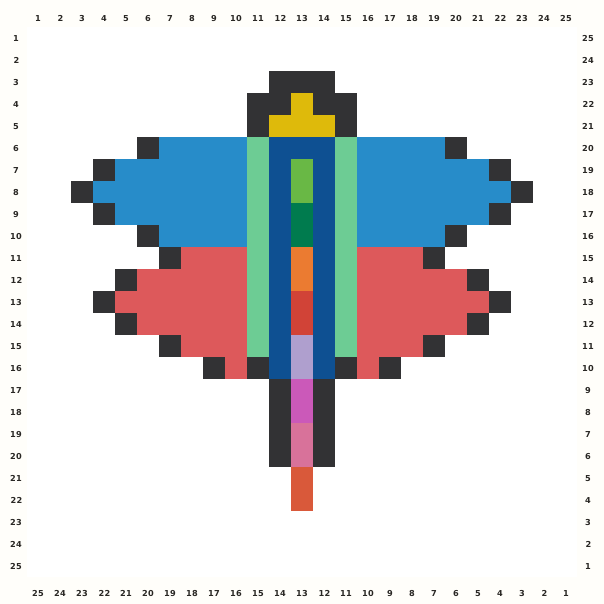
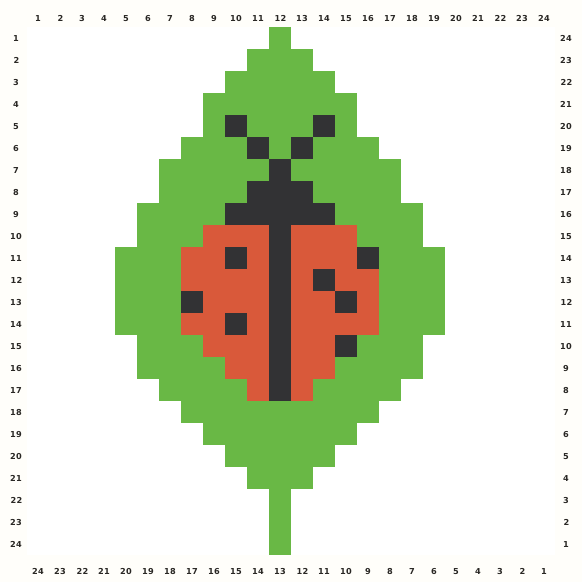
A red-spotted ladybug sits on a tall green leaf, with a centered dark shell split and a narrow stem that stays readable in a square chart.
Edit this pattern online and export a PNG or print-ready PDF for free.
Perler palette · codes hidden · closest screen-color matches
Beige cells are empty pegs; white cells are beads. Brand codes use the closest CIE76 screen-color match from this source palette. Check important shades against physical beads before building.
Perler bead material list
Exact per-color counts for the 24×24 grid, so you can sort cups before you start. Switch the brand above to remap codes, colors and totals on this page.
- Kiwi Lime
P61133 beads - Black
P1828 beads - Spice
P21243 beads
Making notes
Start with the green leaf tip and stem, then seat the red shell around its dark center split. The 15-column motif is centered with four left and five right blank columns; protect the final one-cell leaf point.
This ladybug Perler bead pattern combines a recognizable red beetle with a long leafy support, giving makers more than a circular insect icon. The 24×24 chart contains 204 beads in three roles, leaving the leaf tip, shell split and lower stem easy to edit and export.
Start at the leaf tip and trace the green G outline downward until the shell seat is established. Build the red T wing covers around the central k split, add the remaining black spots, then finish the tapered leaf stem and lower point after checking the vertical axis. The source width is 15 cells inside a 24-row height and is centered with four blank columns left and five right. Preserve the single-cell leaf tip, the four-cell-wide shell axis, the offset k spots and the one-cell stem below the insect; side dots are blank padding, not pale beads.
Pattern layout and bead count
The active ladybug-and-leaf bounds are 15×24. I add four blank columns on the left and five on the right to form a 24×24 square without scaling or mirroring. The 204-bead chart fits one standard 29×29 pegboard and retains the narrow vertical composition. Checkpoints: Rows 1–4: place the leaf tip and first green taper inside the four-column left and five-column right normalization margins. Rows 5–10: preserve the growing leaf shoulders, dark k spots and red T shell approach before the insect reaches full width. Rows 11–14: verify the fullest rows span 15 occupied cells and keep the shell split centered through the four-cell body. Rows 15–24: follow the narrowing green stem to its final single-cell point and reconcile 133 G, 43 T and 28 k beads.
Ways to customize this pattern
A spring variation can use a yellow or blue beetle on a different green leaf, but keep the dark shell split and tapered stem. Any flower or name plate should sit behind the 24×24 tile rather than fill its blank margins.
Green G accounts for 133 leaf and support cells, red-brown T supplies 43 wing and spot-adjacent cells, and charcoal k provides 28 shell splits and spots. Keep the three roles distinct when switching Brands; the k centerline is what makes the beetle read against the leaf.
Print and iron checklist
The leaf edges taper to one-cell points while the red shell is denser and rounder. Fuse the green tip and stem in short passes, stabilize the shell center before heating its outer lobes, and cool the long 24-row piece flat so the bottom point remains straight. Before export, verify the 24×24 coordinates, 204-bead total and the selected brand’s merged color counts against the on-page material list.
Project ideas for Ladybug on a Leaf
The vertical tile suits a nature journal marker, garden-party favor, spring window card or classroom insect display. Support the long leaf from behind rather than punching the lower point. Recolor G for a different plant, but retain the red shell and dark split so the ladybug remains identifiable.
The source grid uses G and the other design symbols only as internal color roles. The interactive chart replaces them with the selected manufacturer codes, while its material list combines any roles that map to the same bead color.