Nature · reference rebuild
Rose Perler Bead Pattern
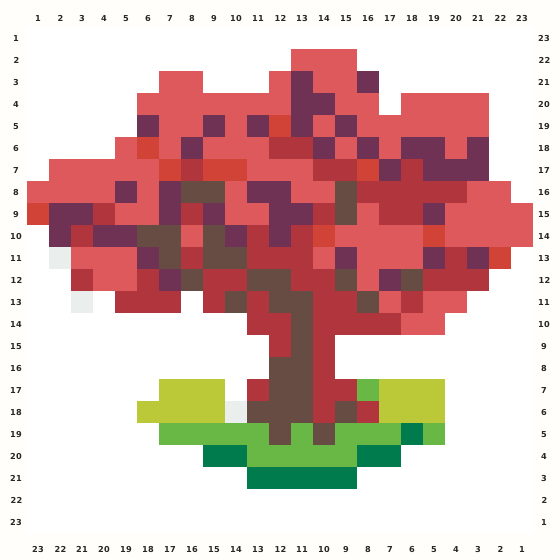
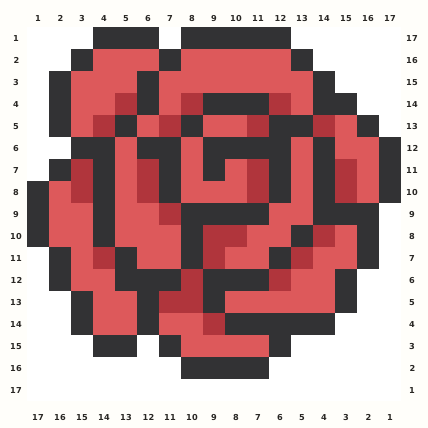
A graphic red rose fills a 17×17 square with a dark contour, two crimson values and a stepped lower stem opening.
Edit this pattern online and export a PNG or print-ready PDF for free.
Perler palette · codes hidden · closest screen-color matches
Beige cells are empty pegs; white cells are beads. Brand codes use the closest CIE76 screen-color match from this source palette. Check important shades against physical beads before building.
Perler bead material list
Exact per-color counts for the 17×17 grid, so you can sort cups before you start. Switch the brand above to remap codes, colors and totals on this page.
- Black
P1896 beads - Hot Coral
P5984 beads - Red
P0527 beads
Making notes
Trace the dark petal rim, then fill the two crimson bands toward the center spiral. Keep the irregular lower folds and the added blank row below the active 16-row source area.
This chart serves rose Perler bead pattern searches with a bold, graphic flower that can be followed from petal rim to central spiral. Its two red values and nearly black structure create a high-contrast motif for makers who want to edit, recolor, print or export one complete rose grid instead of copying an unmeasured image.
Trace the outside petal silhouette first, especially the upper lobes and the pointed side shoulders. Work inward through the lighter crimson bands, then place the darker red folds around the center so the spiral stays open. Finish the lower stem and bottom contour after the flower head is connected; the added blank row remains below the checked 16-row active motif. The source flower is wider than it is tall and the normalized square adds one blank row at the bottom, not a second flower margin. Several dark cells form narrow petal separations inside the red field; they are intentional channels rather than missing beads. Compare the left and right outer lobes, but do not rotate or fully mirror the irregular center fold sequence.
Pattern layout and bead count
Kandi Pad reports a 17×16 active area containing 207 occupied cells. The final editor matrix keeps every active cell and adds one blank row beneath it to make a 17×17 square. This is a one-standard-board project on a 29×29 Midi pegboard; the bottom normalization row stays visible in the coordinate frame and export. Checkpoints: Rows 1–4: retain the two upper petal crowns, the offset center notch and the dark outer rim. Rows 5–11: follow the alternating crimson channels through the broad bloom without filling the interior dark gaps. Rows 12–16: preserve the irregular lower petal folds and the compact dark stem entry. Row 17: leave the added normalization row completely blank beneath the 16-row active source area.
Ways to customize this pattern
Recolor the bloom toward coral, burgundy or plum while retaining the dark structural spiral. Do not fill the intentional bottom padding row or turn the irregular petal folds into a symmetric icon.
Dark Structure supplies the petal outline, inner folds and lower stem, Crimson Rose carries the main bloom, and Deep Rose creates the recessed bands. Keep the two red values distinct when switching Brands; if a manufacturer collapses them visually, preserve the role distinction in the editable source and use codes or the material list to separate the counts.
Print and iron checklist
The rose has a dense 207-bead field with thin dark separators that can close when softened. Fuse the perimeter and large red runs in short alternating passes, leave the center spiral and lower dark stem joints for a final inspection, and cool the panel on a flat surface so the one-cell petal corners do not spread into the neighboring blank cells. Before export, verify the 17×17 coordinates, 207-bead total and the selected brand’s merged color counts against the on-page material list.
Project ideas for Basic Rose
The rose works as a greeting-card centerpiece, garden-club tile, romantic gift tag, bookmark topper or small wall sampler. Mount it from the broad lower flower area rather than the petal tips, and put names or dates on a paper backing. A palette swap can move the bloom toward coral, burgundy or violet while keeping the dark folds legible against the chosen flower color.
The source grid uses k and the other design symbols only as internal color roles. The interactive chart replaces them with the selected manufacturer codes, while its material list combines any roles that map to the same bead color.