Nature · reference rebuild
Jellyfish Perler Bead Pattern
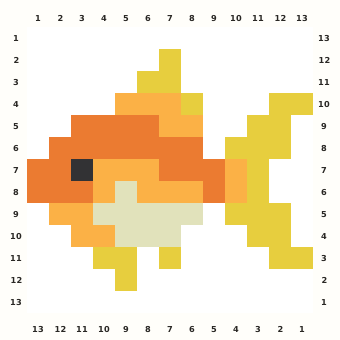
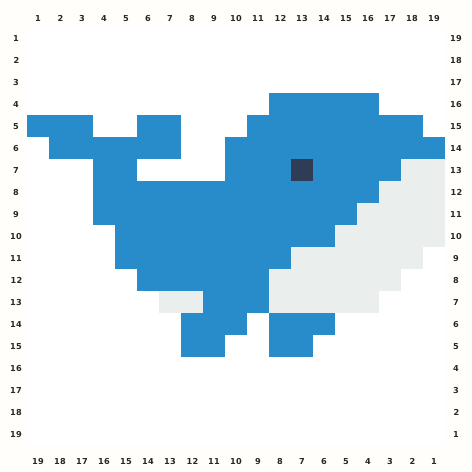
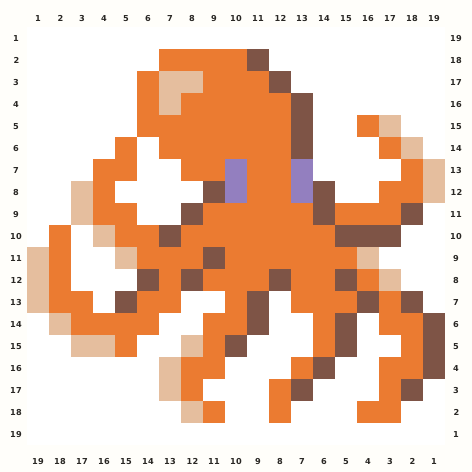
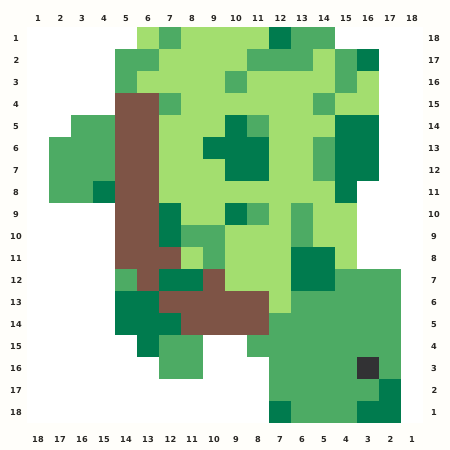
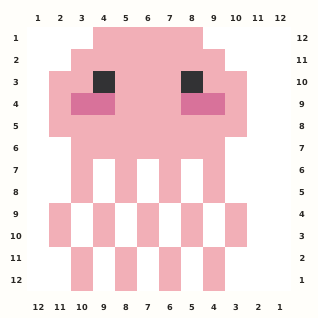
A small pink jellyfish uses a domed bell, two dark eyes, coral edge accents and four separated tentacles in a tidy square chart.
Edit this pattern online and export a PNG or print-ready PDF for free.
Perler palette · codes hidden · closest screen-color matches
Beige cells are empty pegs; white cells are beads. Brand codes use the closest CIE76 screen-color match from this source palette. Check important shades against physical beads before building.
Perler bead material list
Exact per-color counts for the 12×12 grid, so you can sort cups before you start. Switch the brand above to remap codes, colors and totals on this page.
- Flamingo
P20366 beads - Black
P182 beads - Bubblegum
P064 beads
Making notes
Build the pink bell first, then add the two dark eyes and four coral edge accents. Keep the four lower tentacle lanes separated inside the 12×12 tile, with one blank column left and two right.
This jellyfish Perler bead pattern is a compact marine-life project with a clear bell and four hanging tentacles. Its 12×12 editable grid uses 72 occupied cells in three roles, making it approachable for keychains, ocean-study tiles and quick color-brand experiments.
Build the pink p bell from the crown downward, keeping the two top corners stepped symmetrically. Add the dark k eyes and coral S side marks after the bell is filled, then place each tentacle as its own vertical run so the four gaps remain open. The 9×12 source is centered with one blank column on the left and two on the right. Preserve the rounded p dome, two-cell k eye pair, S edge marks and the four tentacle lanes; the spaces between the lanes are deliberate background and should not be joined.
Pattern layout and bead count
The active jellyfish bounds measure 9×12. I center them in a 12×12 square with one blank column at the left and two at the right; no occupied cell is scaled or mirrored. The 72-bead chart fits one standard 29×29 board with generous space around the charm. Checkpoints: Rows 1–3: center the five-to-nine-cell p bell inside the one-left/two-right padding and keep both upper corners stepped. Rows 3–5: place the two k eyes and four S edge accents without merging them into the neighboring pink p field. Rows 7–10: keep four separate tentacle lanes and their dotted channels; the fullest bell rows contain nine occupied cells. Rows 11–12: confirm the four lower p ends and reconcile the 66 p, four S and two k beads.
Ways to customize this pattern
Swap pink for sea-glass blue, lavender or coral, with a darker bell edge if needed. Keep the two eye cells and four tentacle channels unchanged; a bubble background should be a separate backing layer.
Pink p contributes 66 bell and tentacle beads, Coral S contributes four edge accents, and charcoal k contributes the two eyes. Keep the tiny S role separate from p to preserve the bell contour, and never turn the blank tentacle channels into pale beads.
Print and iron checklist
The bell has enough mass to hold heat, but each lower tentacle is a narrow string of four to five beads. Fuse the dome first, touch the tentacles briefly from the center outward, and cool flat before lifting so their spacing and bottom ends stay straight. Before export, verify the 12×12 coordinates, 72-bead total and the selected brand’s merged color counts against the on-page material list.
Project ideas for Jellyfish
This small marine tile fits an ocean-camp badge, aquarium label, zipper pull, summer card or beginner charm. Put a loop behind the solid bell rather than through a tentacle. A blue or lavender variation may change p and S, but keep k eyes and the four-lane spacing intact.
The source grid uses p and the other design symbols only as internal color roles. The interactive chart replaces them with the selected manufacturer codes, while its material list combines any roles that map to the same bead color.