Animals · reference rebuild
Fish Perler Bead Pattern
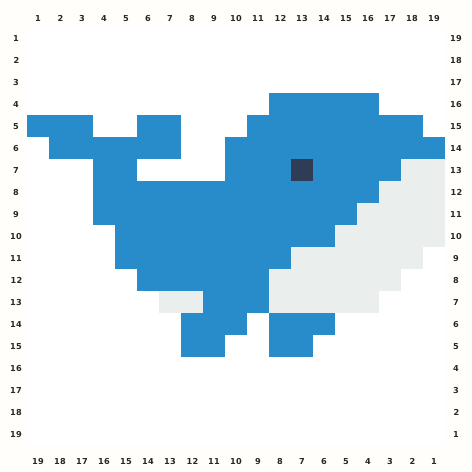
A left-facing goldfish has a stepped tail, rising fin, three golden values, a pale belly and one dark eye.
Edit this pattern online and export a PNG or print-ready PDF for free.
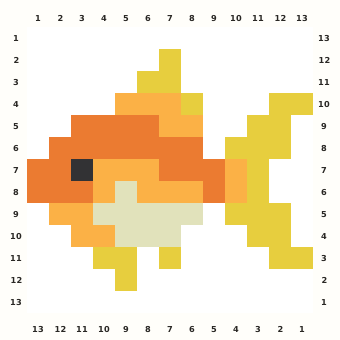
Perler palette · codes hidden · closest screen-color matches
Beige cells are empty pegs; white cells are beads. Brand codes use the closest CIE76 screen-color match from this source palette. Check important shades against physical beads before building.
Perler bead material list
Exact per-color counts for the 13×13 grid, so you can sort cups before you start. Switch the brand above to remap codes, colors and totals on this page.
- Yellow
P0324 beads - Cheddar
P5718 beads - Orange
P0420 beads - Black
P181 beads - Creme
P029 beads
Making notes
Read the fish from its left-facing head into the forked right tail. The upper fin and lower fin use different golden steps, and the lone dark eye is material; preserve both blank normalization rows around the 13×13 chart.
This page targets the broad fish Perler bead pattern search with one simple goldfish silhouette, a tail, dorsal fin and eye. The 13×13 normalized grid is compact enough for beginners while preserving the source's directional movement and pale belly.
Start with the tail fork and top fin as directional anchors, then extend the orange body toward the left-facing head. Fill the golden lower fin and pale belly, place the single dark eye, and finish the stepped tail edge after the central body is stable. The fish points left and its tail reaches both upper and lower right corners, so a horizontal flip changes the intended pose. Keep the one-cell eye at row 7, the three-level tail steps and the blank top and bottom normalization rows; do not fill the pale belly gaps as background.
Pattern layout and bead count
The public active bbox is 13×11 with 72 beads. I add one blank row above and one below to create a 13×13 square, leaving every occupied column and the left-facing orientation unchanged; it fits one standard 29×29 board. Checkpoints: Rows 1–4: retain the rising upper fin and the first stepped tail cells with the top normalization row blank. Rows 5–8: verify the left-facing orange body, one-cell eye and the three golden values around the belly. Rows 9–11: keep the cream underside and lower tail branch separate; do not fill their intentional gaps. Rows 12–13: preserve the final golden fin step and the blank bottom normalization row before export.
Ways to customize this pattern
Try a koi-inspired orange and cream palette, a blue reef version or a simple yellow monochrome. Keep the three tail values, left-facing head and single eye fixed; any bubbles or species labels should sit outside the chart.
Orange Body carries 20 beads, Golden Fin and Tail 18, Bright Gold 24, Cream Belly nine and Black Eye one. Preserve three warm values in the moving tail, keep the cream belly distinct from empty cells, and isolate the single dark eye during Brand mapping.
Print and iron checklist
The tail branches and top fin are thin extensions attached to a denser orange body. Fuse the fork tips and fin points briefly, then heat the body from the center outward and cool flat so the tail remains on the horizontal axis. Before export, verify the 13×13 coordinates, 72-bead total and the selected brand’s merged color counts against the on-page material list.
Project ideas for Goldfish
This one-board fish suits an aquarium label, summer-camp craft, ocean lesson token, lunchbox magnet or small hanging charm. Support the body behind its center rather than the forked tail or top fin, and keep species labels on a backing card.
The source grid uses I and the other design symbols only as internal color roles. The interactive chart replaces them with the selected manufacturer codes, while its material list combines any roles that map to the same bead color.