animals · reference rebuild
Shark Perler Bead Pattern
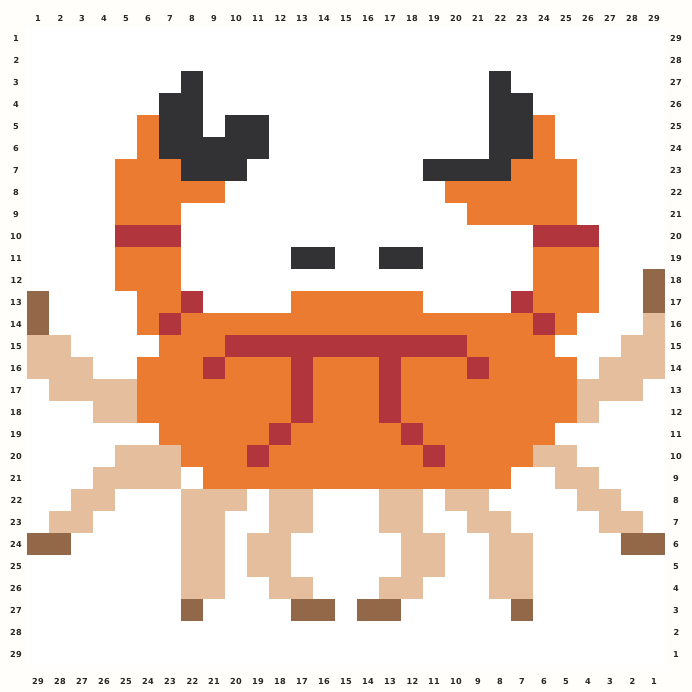
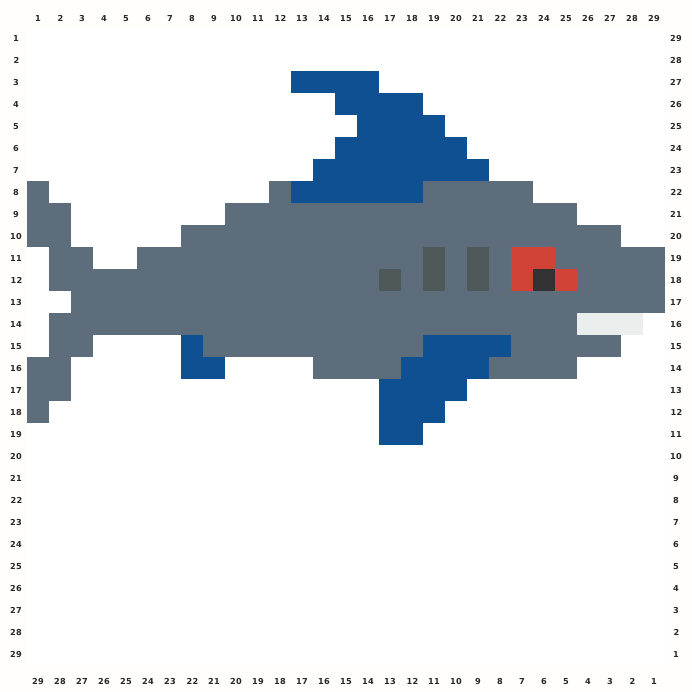
A right-facing slate shark has a dorsal fin, tail fork, gill marks, red eye and tiny white belly accents.
Edit this pattern online and export a PNG or print-ready PDF for free.
Perler palette · codes hidden · closest screen-color matches
Beige cells are empty pegs; white cells are beads. Brand codes use the closest CIE76 screen-color match from this source palette. Check important shades against physical beads before building.
Perler bead material list
Exact per-color counts for the 29×29 grid, so you can sort cups before you start. Switch the brand above to remap codes, colors and totals on this page.
- Dark Blue
P0852 beads - Slate Blue
P252172 beads - Charcoal
P2075 beads - Tomato
P2114 beads - Black
P181 beads - White
P013 beads
Making notes
Lay the right-facing shark from its tail and dorsal fin toward the snout. The five charcoal gill marks, four-cell red eye and three white belly accents are small enough to recount before the broad slate body is fused.
Searchers for a shark Perler bead pattern want one recognizable side-view shark with a dorsal fin, tail, gill marks and a tiny eye accent that can be edited and printed at a standard board size. This 29×29 chart keeps the public orientation and the long horizontal silhouette instead of turning it into a generic fish icon.
Start with the dark dorsal fin and tail supports, then lay the slate-blue back from the tail toward the snout. Fill the lower body around the fin roots, add the charcoal gill marks and red eye near the head, and finish the three white belly cells after the contour has been checked across the center rows. The shark faces right, and its top fin, tail fork and lower fin attach at narrow junctions. Rows 11–12 carry the eye, gill marks and snout details at different columns; the single black feature cell must not become part of the red eye. Preserve the large blank top and bottom margins in the 29×29 square.
Pattern layout and bead count
The public raster is an exact 29×29 grid. Its 237 occupied cells sit inside one standard 29×29 square pegboard with no added padding, and the empty rows above and below are part of the coordinate system. Export the same square so the board guides line up with the source orientation. Checkpoints: Rows 3–7: preserve the stepped dark dorsal fin and its connection to the slate back. Rows 8–13: follow the full body contour to the right-facing snout and keep the four red eye cells in their approved cluster. Rows 14–18: check the three white belly cells, lower fin root and dark tail transitions before fusing. Rows 20–29: leave the lower coordinate field blank; it is intentional margin, not missing shark material. Color audit: total 172 Slate, 52 Dark Teal, five Charcoal, four Tomato, three White and one Black bead.
Ways to customize this pattern
Recolor Slate Blue toward sea-glass, deep navy or pale arctic grey while preserving the Dark Teal fins and isolated Tomato eye. For a classroom set, keep the 29×29 silhouette fixed and vary only the body palette or a backing panel.
Slate Blue supplies 172 body beads, Dark Teal supplies 52 fin and tail beads, Charcoal supplies five gill details, Tomato supplies four eye cells, White supplies three belly cells and Black supplies one feature cell. Keep the cool body contrast and the red eye isolated when a Brand merges nearby dark roles.
Print and iron checklist
The body is a long slate field with thin dark fins and a small red eye cluster. Fuse the tail fork and dorsal tip briefly, then work across the body before placing the five charcoal marks and red cells. Cool flat so the snout and lower fin stay aligned with the horizontal coordinate axis. Before export, verify the 29×29 coordinates, 237-bead total and the selected brand’s merged color counts against the on-page material list.
Project ideas for Shark
At 29×29 and 237 beads, Shark works as an ocean-themed wall tile, aquarium label, backpack patch, summer-party magnet or classroom marine-life marker. Support the long body from below and attach hardware behind the solid midsection, not through the eye, tail fork or fin tips. A palette swap can make an arctic or deep-sea edition while leaving the silhouette intact.
The source grid uses A and the other design symbols only as internal color roles. The interactive chart replaces them with the selected manufacturer codes, while its material list combines any roles that map to the same bead color.