Coastal sea · reference rebuild
Dolphin Perler Bead Pattern
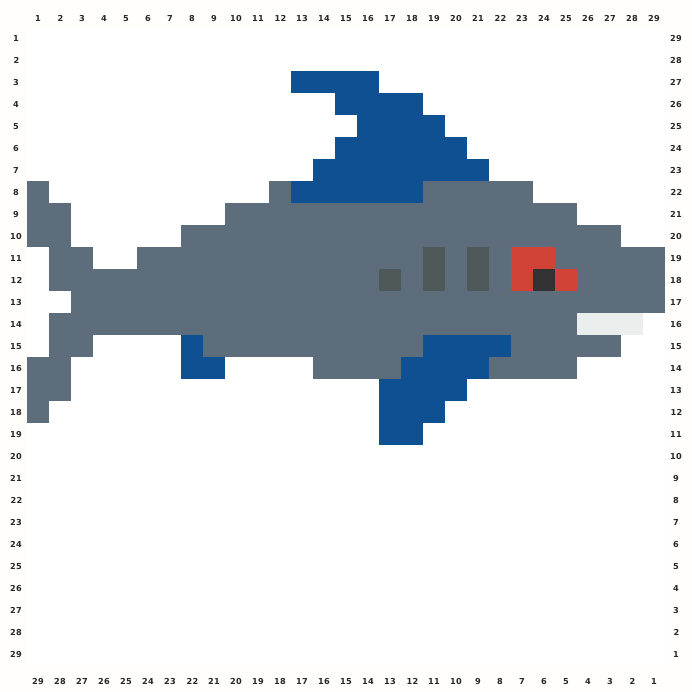
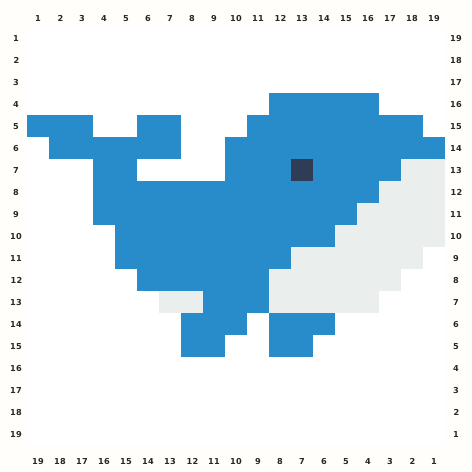
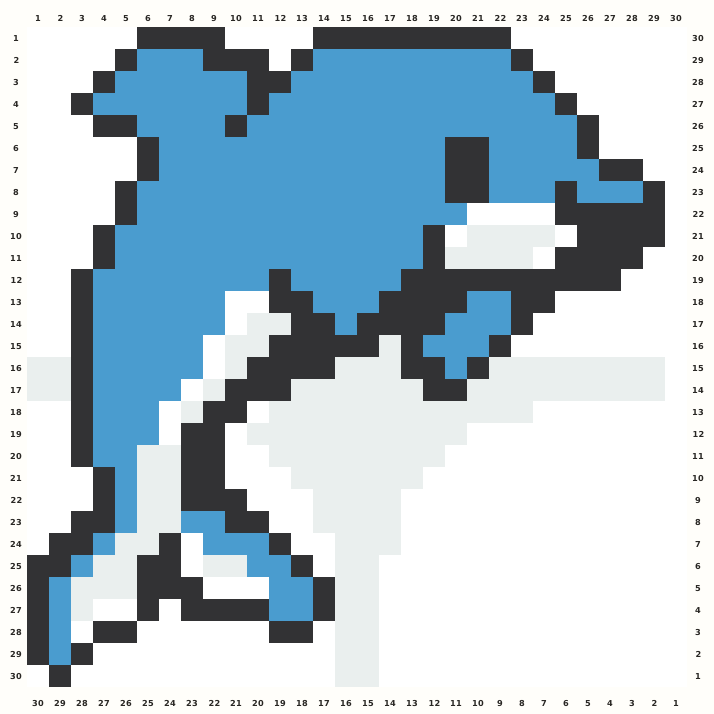
A sweeping dolphin fills nearly the entire thirty-cell frame with a navy perimeter, ocean-blue dorsum and broad white underside, retaining the lifted beak, dorsal fin and forked tail.
Edit this pattern online and export a PNG or print-ready PDF for free.
Perler palette · codes hidden · closest screen-color matches
Beige cells are empty pegs; white cells are beads. Brand codes use the closest CIE76 screen-color match from this source palette. Check important shades against physical beads before building.
Perler bead material list
Exact per-color counts for the 30×30 grid, so you can sort cups before you start. Switch the brand above to remap codes, colors and totals on this page.
- Black
P18162 beads - Pastel Blue
P52246 beads - White
P01123 beads
Making notes
Audit the snout, fin notch, narrow tail junction, and split flukes from their row coordinates. Column 30 is blank, and the 30×30 chart requires connected boards.
Plan this dolphin as a connected-board ocean panel, not a one-board miniature. The three-color division makes the belly readable without extra shading, but the narrow tail connection needs a careful coordinate check. Keep the full thirty-row guide when printing so its board boundary stays in the right place.
Lay the long back contour and rostrum as the first directional guides. Fill blue toward the white ventral wedge, then close the fin and tail flukes from their narrow junctions. Use row 16, the fullest row at 28 occupied positions, as a horizontal recount anchor. This is the batch maximum at 30×30, with only the final right column blank. The snout, fin notch and tail split must remain on their photographed rows instead of being smoothed. Occupied bounds run from row 1 to row 30 and column 1 to column 29.
Pattern layout and bead count
The occupied motif measures 29×30 and is normalized to 30×30 with 1 right. No occupied cell is cropped, scaled, mirrored or moved. The 531-bead chart fits the documented multi-board 30-cell Animal limit. This framing protects the cetacean rostrum geometry. Checkpoints: First occupied row 1: K C6–C9, K C14–C22. Confirm the cetacean rostrum entry point. Fullest row 16 contains 28 occupied cells; compare its complete left-to-right sequence before fusing. Use it as the cetacean rostrum span audit. Rarest role White Belly occurs 123 times at R10C21, R10C22, R10C23, R10C24, R11C20, R11C21, R11C22, R11C23…. Recheck this role beside the cetacean rostrum landmark. Padding audit: 1 right; active bounds are R1–R30 and C1–C29. The cetacean rostrum boundary must remain inside those limits.
Ways to customize this pattern
For an alternate edition, recolor Navy Contour, Ocean Blue, White Belly as separate value roles while leaving every occupied coordinate and 30×30 normalization unchanged. Keep the silhouette-specific landmarks and rare accents distinct at thumbnail size.
Sort the source roles as 162 Navy Contour, 246 Ocean Blue, 123 White Belly. Keep White Belly distinct even though it contributes only 123 cells; Brand remapping should preserve the same light-to-dark hierarchy and never merge an occupied role with background.
Print and iron checklist
The 531-cell body stores considerable heat, unlike the pointed beak and fluke corners. Alternate passes across the torso, use reduced pressure on the outline, and turn with full support. Inspect narrow joints from the reverse before mounting or exporting a replacement chart. Before export, verify the 30×30 coordinates, 531-bead total and the selected brand’s merged color counts against the on-page material list.
Project ideas for Playful Dolphin
Its large kinetic curve fits a pool-room plaque, cetacean lesson panel or ocean-themed door sign. Two mounting points behind the torso prevent the elongated animal from rotating. Keep labels, dates and explanatory text on a separate backing so the approved silhouette stays unchanged.
The source grid uses B and the other design symbols only as internal color roles. The interactive chart replaces them with the selected manufacturer codes, while its material list combines any roles that map to the same bead color.