Woodland · reference rebuild
Owl Perler Bead Pattern
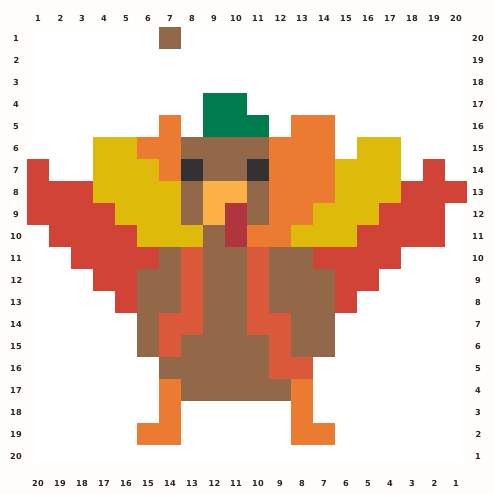
A rounded full-body owl with black ear tufts, layered brown wings, a white facial mask, dark eye wells, a golden beak, grey breast markings and visible feet.
Edit this pattern online and export a PNG or print-ready PDF for free.
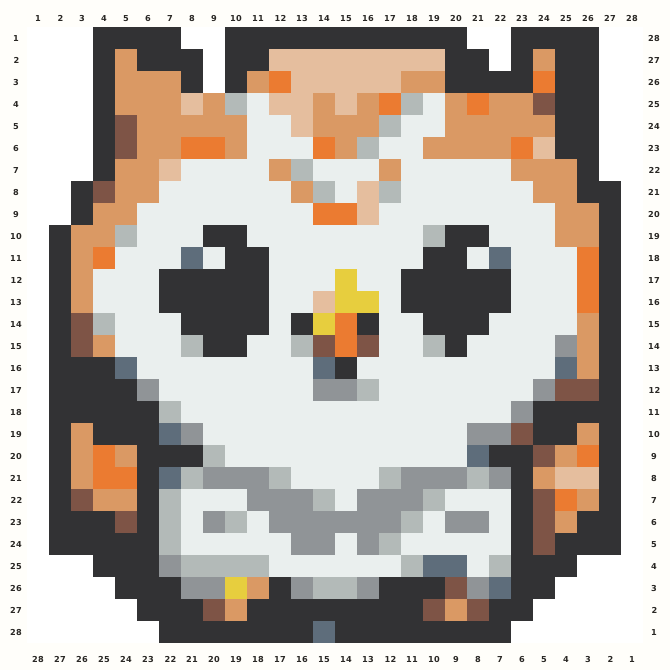
Perler palette · codes hidden · closest screen-color matches
Beige cells are empty pegs; white cells are beads. Brand codes use the closest CIE76 screen-color match from this source palette. Check important shades against physical beads before building.
Perler bead material list
Exact per-color counts for the 28×28 grid, so you can sort cups before you start. Switch the brand above to remap codes, colors and totals on this page.
- Black
P18207 beads - Butterscotch
P9079 beads - Sand
P9825 beads - Orange
P0421 beads - Light Grey
P18136 beads - White
P01224 beads - Gingerbread
P25021 beads - Slate Blue
P25212 beads - Yellow
P035 beads - Grey
P1740 beads
Making notes
Ten source roles preserve the layered woodland plumage, so sort the three browns and three greys before starting. Build the white facial disc around both black eye wells, then place the tiny yellow-and-orange beak and foot accents after the broad belly is stable.
This chart answers owl Perler bead pattern searches with a complete front-facing bird rather than a cropped head: both ear tufts, the white facial disc, folded wings, patterned breast and two feet remain available for editing, brand remapping and export.
Establish the three separated black crown groups on row 1, close the brown forehead between them, and descend through the white facial disc. Build both five-column eye wells together, lock the gold-and-orange beak on rows 12–15, then continue through the grey chevron breast before finishing the black base and paired toes. The face is nearly bilateral, but the plumage is intentionally not: orange wing flecks, brown shadow cells and lower grey bars change from side to side. The narrow white bridges around the eyes and the single central beak cells are the easiest places to shift, so compare their coordinates before filling the broad white belly.
Pattern layout and bead count
Candidate 15 resolves to an active bead layer 26 columns wide by 28 rows high. One blank normalization column is added to each side, producing a 28×28 editor square without scaling, cropping or moving an occupied cell; the 670-bead owl spans columns 2–27 and all 28 rows on one standard 29×29 Midi board. Checkpoints: Row 1: preserve black crown groups at columns 4–7, 10–20 and 23–26 with both gaps left blank. Rows 12–13: match the two five-cell black eye wells and keep the gold beak cells at columns 15–16. Rows 21–24: audit the alternating grey breast chevrons before completing the surrounding white belly. Rows 26–28: retain the separated gold and brown toe accents above the continuous tapered black base.
Ways to customize this pattern
A moonlit owl can collapse the three browns into navy, slate and silver while keeping a pale facial disc; a russet variation can move the wing flashes toward copper. Preserve the paired black eye wells, central gold beak and grey breast chevrons so the full-body pose remains readable.
Black defines the contour and eye wells; Dark Brown, Brown and Light Brown layer the crown and wings; Orange and Yellow isolate the beak and feather flashes. Dark Grey, Grey and Light Grey form the breast chevrons while White preserves the facial disc, so retain that value hierarchy if a manufacturer maps adjacent roles to one code.
Print and iron checklist
Heat accumulates across the dense facial disc while the pointed ear tufts, stepped wing edges and small toes have less neighboring support. Work in short passes from the center outward, keep the black eye cavities visually separate from their white highlights, and cool the silhouette beneath a flat weight before lifting its lower edge. Before export, verify the 28×28 coordinates, 670-bead total and the selected brand’s merged color counts against the on-page material list.
Project ideas for Night Owl
The 28×28 owl suits a woodland window panel, library plaque, classroom bird display, or autumn garland centerpiece. Center hardware behind the broad mask and belly rather than an ear tuft or toe. Recheck the three crown groups, paired eye wells, central beak, grey breast chevrons, and separated toe accents before mounting.
The source grid uses F and the other design symbols only as internal color roles. The interactive chart replaces them with the selected manufacturer codes, while its material list combines any roles that map to the same bead color.