Animals · reference rebuild
Flamingo Perler Bead
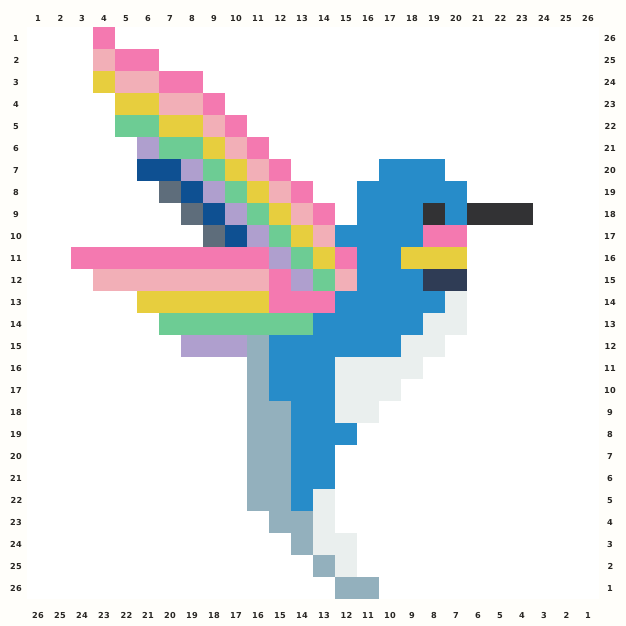
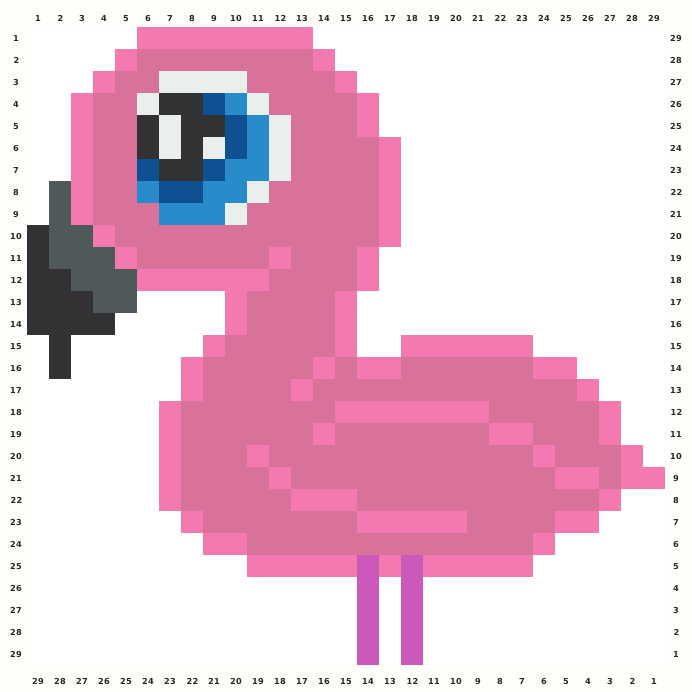
A pink flamingo stands in profile with a dark eye, pale face patch, curled neck, broad body and two slim purple legs.
Edit this pattern online and export a PNG or print-ready PDF for free.
Perler palette · codes hidden · closest screen-color matches
Beige cells are empty pegs; white cells are beads. Brand codes use the closest CIE76 screen-color match from this source palette. Check important shades against physical beads before building.
Perler bead material list
Exact per-color counts for the 29×29 grid, so you can sort cups before you start. Switch the brand above to remap codes, colors and totals on this page.
- Cotton Candy
P242108 beads - Bubblegum
P06222 beads - White
P0114 beads - Black
P1822 beads - Dark Blue
P087 beads - Light Blue
P0911 beads - Charcoal
P20712 beads - Fuchsia
P25710 beads
Making notes
Work from the face patch through the curved neck into the broad pink body. Stabilize the narrow neck and beak details before placing the two purple leg columns; the full 29×29 matrix contains 406 beads and no normalization padding.
A flamingo Perler bead pattern should show the bird’s distinctive curved neck, long legs and full side profile rather than a generic pink blob. This checked 29×29 square gives makers a readable tropical motif with a small face patch, dark eye, layered pink body and export-ready color roles.
Build from the face downward: place the bright-pink crown, darker pink cheek field and pale face patch, then add the charcoal eye, navy beak accents and cyan detail. Follow the dark neck into the large pink body, fill the lower body rows, and finish the two purple leg columns after the silhouette is fully supported. The neck bends through a narrow one-cell corridor before opening into a wide body, and the left edge includes a stair-step dark wing or tail. Preserve the pale face cells, the paired dark and navy beak marks, the grey left contour, the blank channel below the neck, and the two separated four-cell leg columns at rows 26–29.
Pattern layout and bead count
The selected source already occupies a 29×29 square, so I retain the full orientation and add no padding. All 406 occupied cells remain in place and fit exactly on one standard 29×29 square pegboard; because there is no spare border, place the board on a flat surface before fusing and keep the outer tip supported. Checkpoints: Rows 1–6: confirm the bright crown, darker pink face ring, pale face patch and the charcoal/navy/cyan beak cluster before extending the neck. Rows 7–14: trace the grey left contour and curved neck, keeping the one-cell blank channel and the first body shoulder from collapsing. Rows 15–22: count the broad S and h body fields row by row; preserve the right-side pink tip and every internal transition shown by the coordinate grid. Rows 23–25: verify the lower body taper and the separate blank space above the legs before placing the purple m cells. Rows 26–29: retain both four-cell leg columns and reconcile 222 S, 108 h, 22 k, 14 f, 12 j, 11 B, 10 m and 7 N beads.
Ways to customize this pattern
Shift the two pink roles toward coral and rose, or make a sunset version with a warmer body and lavender legs. Keep the pale face, charcoal eye, navy beak marks and separated leg columns unchanged so the side-profile silhouette survives every recolor.
Use S for the darker pink body mass, h for bright-pink highlights and crown, f for the pale face patch, k for charcoal eye and contour, N for navy beak accents, B for the small cyan beak detail, j for the grey tail edge and m for the purple legs. Preserve the contrast between the two pink roles and keep f cells occupied rather than treating them as background.
Print and iron checklist
The 29×29 field has large pink runs beside fragile one-cell neck turns, face details and legs. Fuse the face and neck in short passes first, stabilize the body with even heat, then return to the legs with the iron centered over each column. Avoid sweeping across the blank channel or merging the purple feet into the body. Before export, verify the 29×29 coordinates, 406-bead total and the selected brand’s merged color counts against the on-page material list.
Project ideas for Flamingo
Flamingo is a full 29×29, 406-bead chart for a single standard board. It suits a tropical party sign, pool-room tile, summer card, garden marker or statement wall piece. The long neck and legs benefit from cooling on the board. Recolor the two pink roles for coral or sunset themes, but preserve the pale face, dark eye and separated legs so the bird remains identifiable.
The source grid uses S and the other design symbols only as internal color roles. The interactive chart replaces them with the selected manufacturer codes, while its material list combines any roles that map to the same bead color.