Thanksgiving · reference rebuild
Perler Bead Turkey
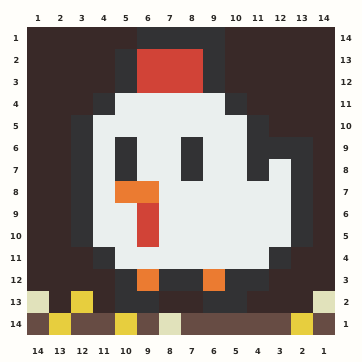
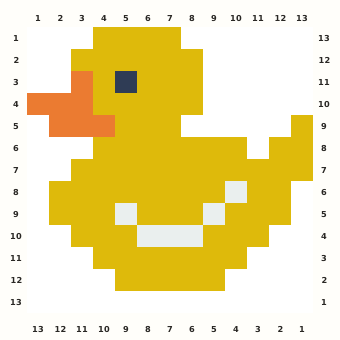
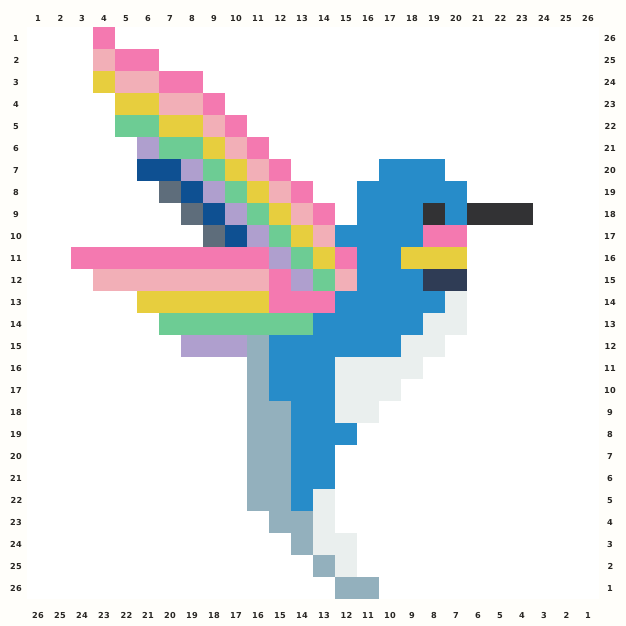
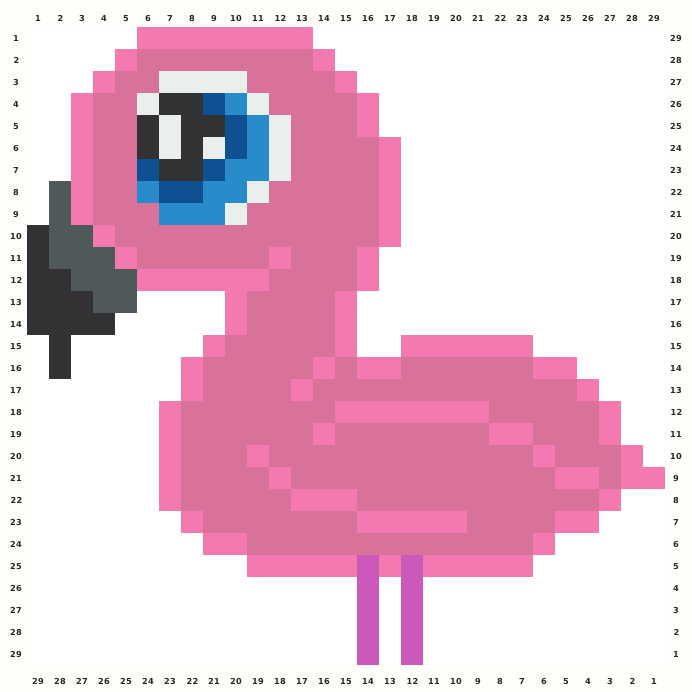
A fan-tailed turkey layers red, gold, orange and brown feathers around a small green crown and warm centered body.
Edit this pattern online and export a PNG or print-ready PDF for free.
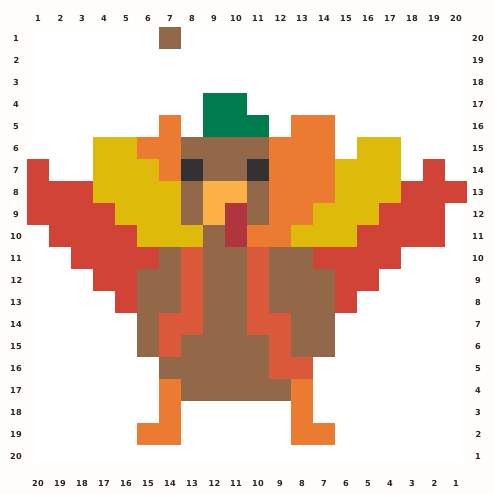
Perler palette · codes hidden · closest screen-color matches
Beige cells are empty pegs; white cells are beads. Brand codes use the closest CIE76 screen-color match from this source palette. Check important shades against physical beads before building.
Perler bead material list
Exact per-color counts for the 20×20 grid, so you can sort cups before you start. Switch the brand above to remap codes, colors and totals on this page.
- Light Brown
P2153 beads - Dark Green
P105 beads - Orange
P0427 beads - Sunflower
P26829 beads - Tomato
P21137 beads - Black
P182 beads - Cheddar
P573 beads - Red
P052 beads - Spice
P21214 beads
Making notes
Place the crown and green cells before building the fan from red tips through gold and orange bands. Fill the brown body last, then add the orange legs; rows 7–10 carry the widest span and the final row is deliberate blank padding.
Searchers for a Perler bead turkey need a generic Thanksgiving bird with a broad fan tail, readable feet and enough color separation to sort a family or classroom project. This 20×20 chart preserves the feather rays, small green crown, dark face marks and compact brown body in a single editable square.
Place the single brown crown bead first, then add the two green crown cells and the orange shoulder links. Build the fan from its outer red tips inward through yellow and orange feather rows, set the dark face accents, and fill the brown body from the neck to the lower taper. Finish the orange legs and bottom feather edges after the fan is balanced. The fan is widest from rows 7–10, with asymmetrical one-cell gaps on both sides and a narrow body that shifts slightly through the lower rows. Retain the three-cell red tips, yellow bands, orange outer accents, two dark face cells, and the blank final row added during square normalization. Do not close the feather gaps just to make the outline look solid.
Pattern layout and bead count
The active source bounds are 20×19. I retain all occupied cells and add one blank row beneath the extracted motif to form a 20×20 editor square; the bird stays upright and centered without horizontal padding. The 172 beads fit one standard 29×29 board, with a safe handling margin around the fan. Checkpoints: Rows 1–5: place the lone brown crown bead, two green cells and orange shoulder links; verify the empty rows 2–3 remain empty around the rising head. Rows 6–10: count the red fan tips, yellow bands, orange rails and two dark face cells before fusing the widest feather span. Rows 11–15: follow the brown body and lighter T feather ribs through the stepped center, keeping the red outer contour separate from the body mass. Rows 16–19: check the two orange leg columns, lower brown taper and paired orange feet against the 20-column ruler. Row 20 padding: leave the final row blank and reconcile 53 b, 37 r, 29 Y, 27 O, 14 T, 5 D, 3 o, 2 k and 2 d beads.
Ways to customize this pattern
Use copper, rust or muted plum in place of the gold and orange roles for an autumn palette, while keeping the red fan tips and brown body. If mounting as a place card, attach from the lower body area and leave the feather points unsupported until fully cool.
Use b for the dominant warm brown body, r for crimson feather tips, Y for golden bands, O for orange transitions, T for the lighter brown feather ribs, D for the green crown, o for bright orange accents, k for the two dark face cells and d for deep-red details. The nine roles preserve the source’s layered autumn value structure across every Brand mapping.
Print and iron checklist
Nine roles create short color islands inside a broad feather fan, especially the small orange and deep-red cells near the center. Fuse the outer fan in mirrored sections, check each dark face accent before applying heat to the brown body, and support the narrow orange legs. A flat cooling period protects the feather points from curling. Before export, verify the 20×20 coordinates, 172-bead total and the selected brand’s merged color counts against the on-page material list.
Project ideas for Turkey
Turkey is a 20×20, 172-bead seasonal chart for one standard pegboard. It works as a Thanksgiving place-card icon, autumn garland tile, classroom craft, dinner-table tag or small wall decoration. The fan edges are the fragile part, so leave the piece on the board until cool. Change the yellow and orange roles for harvest palettes while retaining the red tips and brown center for recognition.
The source grid uses b and the other design symbols only as internal color roles. The interactive chart replaces them with the selected manufacturer codes, while its material list combines any roles that map to the same bead color.