Seasonal · reference rebuild
Candy Cane Perler Bead Pattern
A striped candy cane bends around a compact hook, with alternating red and pale bands framed by a charcoal edge in a clean square chart.
Edit this pattern online and export a PNG or print-ready PDF for free.
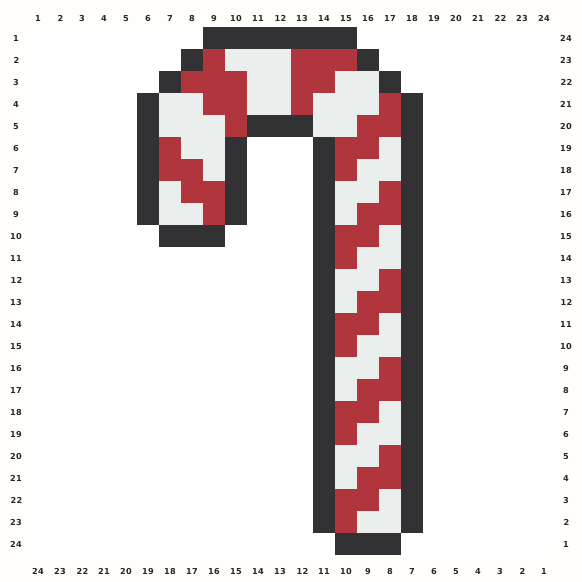
Perler palette · codes hidden · closest screen-color matches
Beige cells are empty pegs; white cells are beads. Brand codes use the closest CIE76 screen-color match from this source palette. Check important shades against physical beads before building.
Perler bead material list
Exact per-color counts for the 24×24 grid, so you can sort cups before you start. Switch the brand above to remap codes, colors and totals on this page.
- Black
P1868 beads - Red
P0549 beads - White
P0152 beads
Making notes
Start with the charcoal hook cap, follow the red and pale stripe turns down the curve, then extend the two straight charcoal rails. Keep the inner hook channel open and recount 68 charcoal, 49 red and 52 pale beads in the 24×24 chart.
A maker searching for a candy cane Perler bead pattern wants a festive object with an unmistakable hooked silhouette, simple stripes and a small color sort. This 24×24 chart keeps the diagonal hook, long vertical shaft and alternating red-white rhythm editable for ornaments, gift tags and winter decorations.
Start at the top hook, placing the charcoal cap and first red-white turns from left to right. Follow the outer bend downward, then build the two charcoal rails of the straight shaft row by row. Fill each stripe between those rails and finish the bottom three-cell cap after counting the red and pale bands. The active source is only 13 columns wide but its 24-row hook and shaft need centered padding. Retain five blank columns on the left and six on the right, the three-cell charcoal top cap, and the narrow blank channel inside the hook. The f beads are pale occupied beads, while dots outside the cane remain background.
Pattern layout and bead count
Kandi Pad reports a 13×24 active grid. I crop the active bounds and center them in a 24×24 square by adding five blank columns on the left and six on the right; no hook cell is cropped or mirrored. The 169-bead result fits one standard 29×29 board, leaving room around the tall shaft for a pegboard frame. Checkpoints: Rows 1–4: confirm the charcoal seven-cell top cap, the red-white hook turns and the five-column left padding before extending the curve. Rows 5–9: count the outer charcoal edge, inner hook channel and alternating d/f bands; keep every dot between the rails empty. Rows 10–18: follow the straight shaft at its fixed right-side columns and verify each red-to-pale stripe transition remains two or three cells wide. Rows 19–23: preserve the repeated shaft rhythm and the six-column right padding while checking the charcoal side rails for continuity. Row 24: finish the three-cell charcoal bottom cap and reconcile the 68 k, 49 d and 52 f beads with the 169-cell total.
Ways to customize this pattern
Swap deep red for berry, evergreen or soft pink for a different holiday palette, but retain the charcoal rails and pale stripe role. The open hook can frame a small ribbon only if the ribbon sits behind the finished piece and does not bridge the one-cell channel.
Use k for the charcoal contour and shaft rails, d for the deep red stripe, and f for the pale stripe. The three-role palette keeps color sorting easy and preserves the source contrast. Do not replace f beads with empty cells: every pale mark inside the 13×24 active bounds is part of the 169-bead chart.
Print and iron checklist
Charcoal rails and stripe turns include many single-cell corners that can flatten into neighboring colors if heated too aggressively. Fuse the hook in small sections, keep the shaft vertical with a board edge or ruler, then press the broad red-white interior evenly. Let the piece cool flat before lifting from the lower cap. Before export, verify the 24×24 coordinates, 169-bead total and the selected brand’s merged color counts against the on-page material list.
Project ideas for Candy Cane
Candy Cane is a 24×24, 169-bead design that fits one standard square board and suits a tree ornament, stocking tag, winter garland, card insert or classroom exchange. Keep a hole or attachment point outside the hook’s one-cell gaps rather than piercing a thin rail. A softer holiday version can swap the red role for pink, berry or green while preserving the charcoal outline and pale stripes.
The source grid uses k and the other design symbols only as internal color roles. The interactive chart replaces them with the selected manufacturer codes, while its material list combines any roles that map to the same bead color.
More patterns like this
Plan a festive set with more Christmas Perler bead patterns; compare bead counts and colors before choosing.