Symbols · reference rebuild
Music Note Perler Bead Pattern
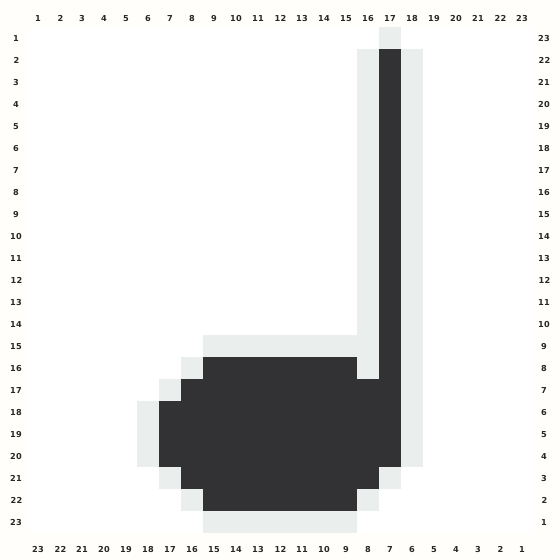
A tall quarter-note silhouette uses a narrow pale stem and a solid charcoal note head, centered with clear coordinate space for a clean musical symbol.
Edit this pattern online and export a PNG or print-ready PDF for free.
Perler palette · codes hidden · closest screen-color matches
Beige cells are empty pegs; white cells are beads. Brand codes use the closest CIE76 screen-color match from this source palette. Check important shades against physical beads before building.
Perler bead material list
Exact per-color counts for the 23×23 grid, so you can sort cups before you start. Switch the brand above to remap codes, colors and totals on this page.
- White
P0158 beads - Black
P1881 beads
Making notes
Trace the 13-cell pale stem with a straight guide, then widen into the charcoal note head. The active strip is centered by five blank columns on each side; do not treat its 58 f cells as background.
Searchers for a music note Perler bead pattern need a simple quarter-note symbol that prints cleanly and stays easy to place one bead at a time. This centered 23×23 chart uses only charcoal and pale occupied cells, making it practical for instrument labels, music-class crafts and fast editor exports.
Start at the single pale f tip and trace the narrow vertical stem downward without widening it. At the lower turn, build the pale shoulder into the dark k note head from left to right, then fill the rounded lower bowl and inspect its stepped underside before fusing. The source is 13×23 and the final square adds five blank columns on each side. Keep the stem on the right side of the active strip, preserve the one-cell pale accent along the shoulder, and never fill the dotted side margins or confuse the pale f cells with background.
Pattern layout and bead count
The active source bounds measure 13×23. I center them in a 23×23 square with five blank columns on the left and five on the right; no occupied cell is cropped or moved. The sparse 139-bead chart fits one standard 29×29 board with generous handling room. Checkpoints: Rows 1–14: follow the lone f stem on the right side of the active strip and leave five blank columns outside each edge. Rows 15–17: confirm the pale shoulder joins the charcoal bowl without closing the stem gap; row 17 reaches 12 occupied cells. Rows 18–21: preserve the rounded k head, whose fullest columns are 16 and 17 with 21 occupied cells each. Rows 22–23: keep the seven-cell pale underside and reconcile the full 139-bead, two-role count before pressing.
Ways to customize this pattern
A concert edition can swap charcoal for navy or plum and pale f for silver, but keep the narrow stem and lower bowl unchanged. A mirrored note belongs on a separate tile, not inside this published orientation.
Charcoal k supplies 81 note-body beads and pale f supplies 58 stem and shoulder beads. Keep the two roles in separate cups even though f is light: every f cell inside the active strip is occupied and should remain available when another Brand is selected.
Print and iron checklist
The upper stem is a 13-bead vertical edge with little lateral support, while the lower k bowl is dense. Fuse the stem with a straight guide, heat the bowl in even horizontal passes, and cool the whole 23×23 tile flat before lifting the narrow top. Before export, verify the 23×23 coordinates, 139-bead total and the selected brand’s merged color counts against the on-page material list.
Project ideas for Music Note
Use this 139-bead symbol as a choir-folder tag, piano-studio plaque, playlist ornament or repeated border unit. Attach a backing behind the bowl, not through the narrow stem. A reversed note can be made by mirroring a copy outside this approved grid while keeping the published orientation intact.
The source grid uses k and the other design symbols only as internal color roles. The interactive chart replaces them with the selected manufacturer codes, while its material list combines any roles that map to the same bead color.