Animals · reference rebuild
Monkey Perler Bead Pattern
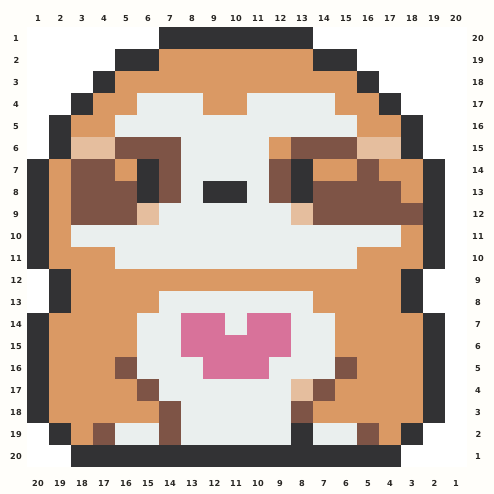
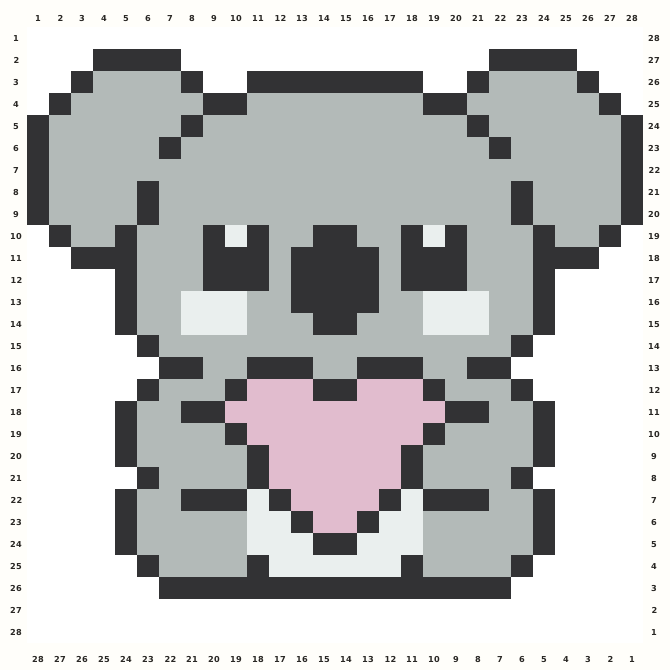
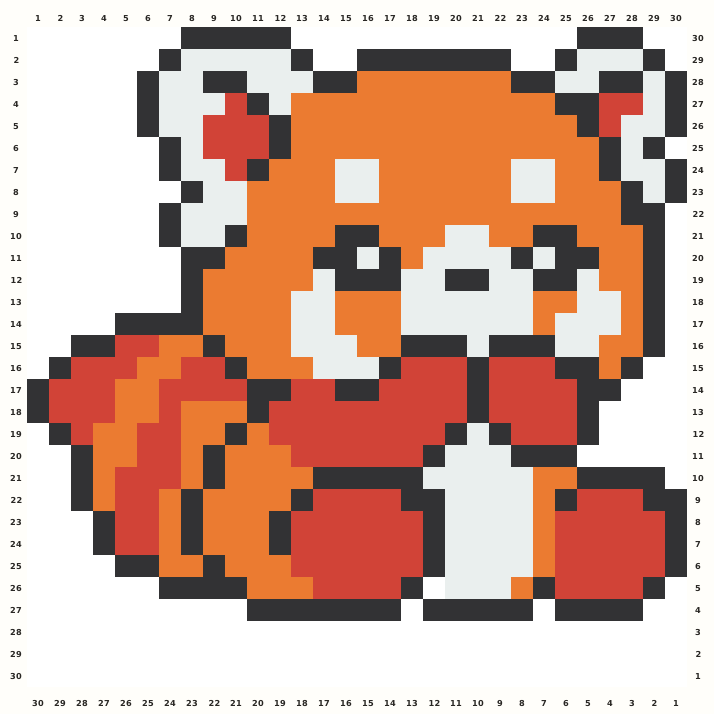
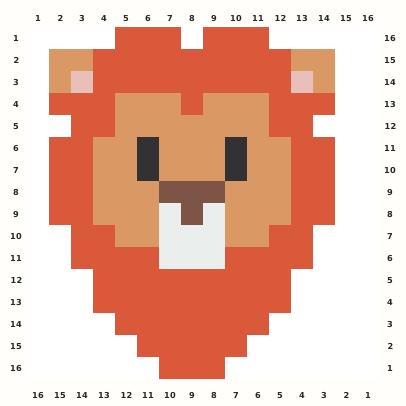
A compact monkey portrait uses layered brown fur, a peach face, two pink cheeks, bright eye marks and a curling tail.
Edit this pattern online and export a PNG or print-ready PDF for free.
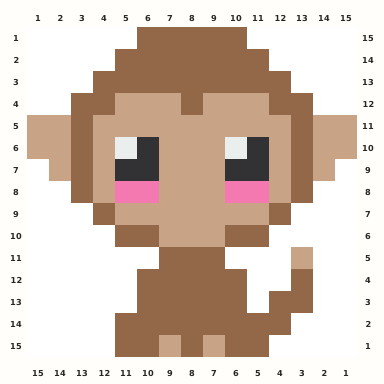
Perler palette · codes hidden · closest screen-color matches
Beige cells are empty pegs; white cells are beads. Brand codes use the closest CIE76 screen-color match from this source palette. Check important shades against physical beads before building.
Perler bead material list
Exact per-color counts for the 15×15 grid, so you can sort cups before you start. Switch the brand above to remap codes, colors and totals on this page.
- Light Brown
P2169 beads - Fawn
P20553 beads - White
P012 beads - Black
P186 beads - Cotton Candy
P2424 beads
Making notes
Place both ear caps and the peach face before extending the brown torso. Recount the four pink cheek cells, two white eye highlights and the offset tail instead of mirroring the whole animal.
This monkey Perler bead pattern presents a full small animal rather than an isolated face icon. The rounded ears, layered brown fur, peach muzzle, dark eye wells, pink cheek marks, compact torso and curled side tail can all be edited in the browser, remapped to five bead Brands and exported with exact counts.
Build the two dark-edged ears and rounded crown first, then descend through the darker fur mass. Fill the peach face and belly in connected blocks, keeping both dark eyes and the tiny white highlights open. Add the pink cheek cells next, then complete the torso, legs and offset tail from its body connection outward. The monkey is broadly front-facing but the tail projects from one side, so a full mirror would create the wrong pose. Its ears are similar in size while the lower legs and tail use different spans. Count the two pink cheek cells as four separate accents, preserve the small white eye highlights and keep the outer blank cells outside the silhouette.
Pattern layout and bead count
Kandi Pad reports a 15×15 square with 134 occupied beads and no normalization padding. The checked matrix keeps the complete ear-to-tail silhouette in that square, making it a one-standard-board project on a 29×29 Midi pegboard. The tail's side projection is part of the real width; do not trim it to make a smaller-looking icon. Checkpoints: Rows 1–4: retain both rounded ear caps and the stepped brown crown without flattening the top contour. Rows 5–8: keep the peach face centered, both dark eye wells open and the two white highlight cells visible. Rows 8–12: recount the four pink cheek accents and preserve the separate belly-to-torso transition. Rows 13–15: follow the offset tail and lower leg groups; do not mirror the side projection.
Ways to customize this pattern
Shift the fur toward cocoa, cinnamon or cool slate and retain a lighter peach face. The pink cheek marks may become coral, but the tail projection and ear geometry should not move.
Brown Fur is the dominant coat role, Peach Face separates the muzzle and belly, Black Structure defines the eye wells and contour marks, Pink Cheeks supplies four small accents, and White Highlights keeps the eyes bright. When switching Brands, protect the light-versus-dark face contrast even if two brown screen matches are close.
Print and iron checklist
The brown crown and body are dense, but the peach face boundary, pink cheeks and narrow tail tip can melt into adjacent values. Fuse the central torso in alternating short passes, leave the eye highlights and tail bridge for a final check, and cool the square flat so the tail does not pull the lower edge sideways. Before export, verify the 15×15 coordinates, 134-bead total and the selected brand’s merged color counts against the on-page material list.
Project ideas for Monkey
Use the monkey as a jungle-study tile, zoo activity badge, child-made magnet, banana-party favor or a small storybook prop. Attach a backing behind the broad torso and keep hardware away from both ears and the tail tip. A palette variation can shift the fur toward cinnamon, cocoa or slate while leaving the peach face and pink cheeks distinct.
The source grid uses b and the other design symbols only as internal color roles. The interactive chart replaces them with the selected manufacturer codes, while its material list combines any roles that map to the same bead color.