Mountain forest · reference rebuild
Red Panda Perler Bead Pattern
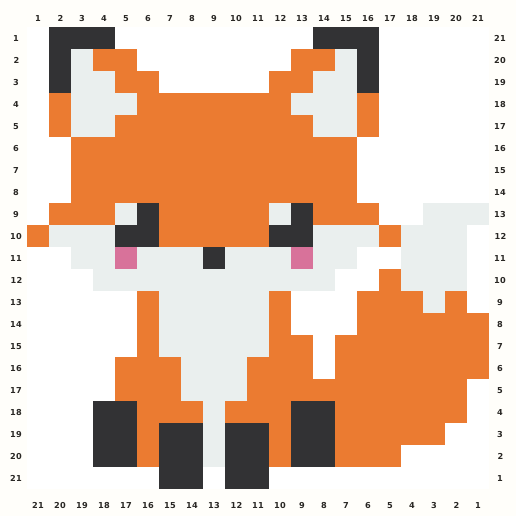
Wide cream-lined ears, bright brows, a compact white muzzle, rust paws and a bold curled tail make this seated red panda readable even as a small preview.
Edit this pattern online and export a PNG or print-ready PDF for free.
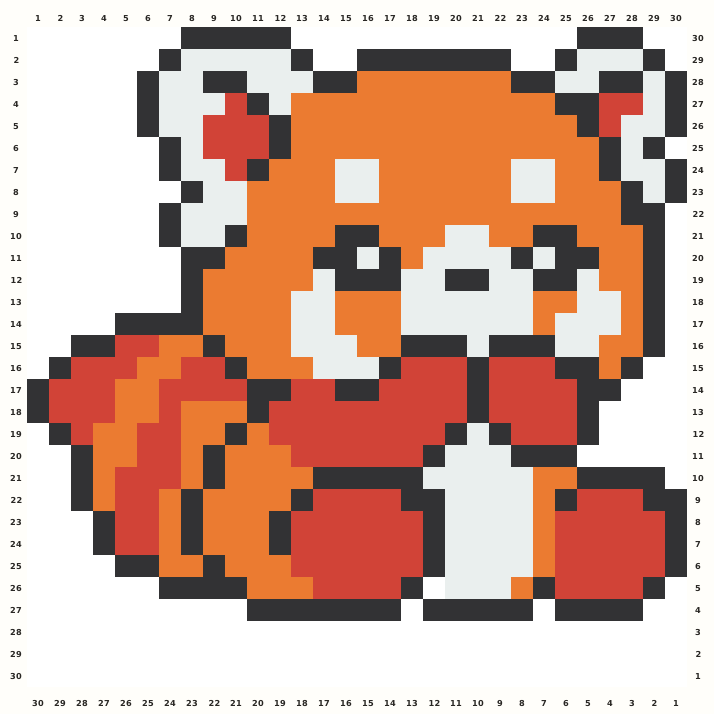
Perler palette · codes hidden · closest screen-color matches
Beige cells are empty pegs; white cells are beads. Brand codes use the closest CIE76 screen-color match from this source palette. Check important shades against physical beads before building.
Perler bead material list
Exact per-color counts for the 30×30 grid, so you can sort cups before you start. Switch the brand above to remap codes, colors and totals on this page.
- Black
P18181 beads - White
P01119 beads - Orange
P04200 beads - Tomato
P211137 beads
Making notes
This chart is widest at the ears and curled tail, so connect boards before placing beads and use the black outline as the first checkpoint. Fill the orange head and white face next, then alternate the rust and orange tail bands so the curl stays easy to audit row by row.
Plan the seated red panda as a four-board display with a prominent curled tail. Check the cream ear linings and small white muzzle against the broad orange head, then follow the alternating tail bands individually. The complete 30×30 coordinate frame holds 637 beads and must stay intact when exported.
Start with the separated ear and tail-tip groups on row 1, then build the orange crown and cream ear interiors through row 9. Place eyes, brows and muzzle before descending into the rust torso; construct the curled tail alongside the body so each orange, rust and cream band remains attached to its intended row. The animal is strongly asymmetric because the tail occupies the right side and reaches column 30, while the seated body begins farther left. Do not mirror the ear markings, rust facial stripes, paws or tail bands. Rows 28–30 are normalization blanks, not a cue to move the 27-row active figure downward.
Pattern layout and bead count
The occupied design spans 30 columns and 27 rows inside a 30×30 guide. Rows 28–30 are empty; the top and side edges have no padding. Connect four 29×29 square Midi boards in a 2×2 layout, and keep the bottom guide rows in the export so the coordinates remain consistent. Checkpoints: Row 1 retains the five-cell Black Structure crown at columns 8–12 and the separate tail-tip group at columns 28–30. Rows 10–15 preserve the paired eyes, cream brows, white muzzle sections and central black nose without mirroring the rust cheek stripes. Row 22 is the fullest occupied row with 28 cells; compare its body-to-tail bridge before applying heat. Tail-band audit: keep the alternating Orange, Rust Shadow and Cream Markings runs through columns 20–30 while retaining all three blank rows at the bottom.
Ways to customize this pattern
A winter red panda can use cranberry, white and charcoal; a forest version can add a muted green background border. Do not recolor the cheek stripes and face fill to the same value.
Keep 181 Black Structure cells, 119 Cream Markings, 200 Red-Panda Orange cells and 137 Rust Shadow cells. Orange and Rust must remain visibly separate across the legs and tail bands, while Cream needs enough contrast to retain the ear linings, brows and muzzle after any Brand remapping.
Print and iron checklist
The dense head and haunches retain more heat than ear points, facial whites, paw corners and the long tail curl. Work from the torso toward both extremes in alternating passes, preserve openings around the black features, support the entire 30-cell span during the flip and cool the panel beneath a rigid weight. Before export, verify the 30×30 coordinates, 637-bead total and the selected brand’s merged color counts against the on-page material list.
Project ideas for Red Panda
The seated mountain-forest silhouette works as a wildlife-club plaque, conservation fundraiser centerpiece or temperate-forest classroom marker. Use a full-width backing behind both body and tail rather than hanging from one ear. Educational captions about arboreal movement, bamboo feeding or habitat corridors belong on a separate card so they do not alter the matrix.
The source grid uses O and the other design symbols only as internal color roles. The interactive chart replaces them with the selected manufacturer codes, while its material list combines any roles that map to the same bead color.