Animals · reference rebuild
Cow Perler Bead Pattern
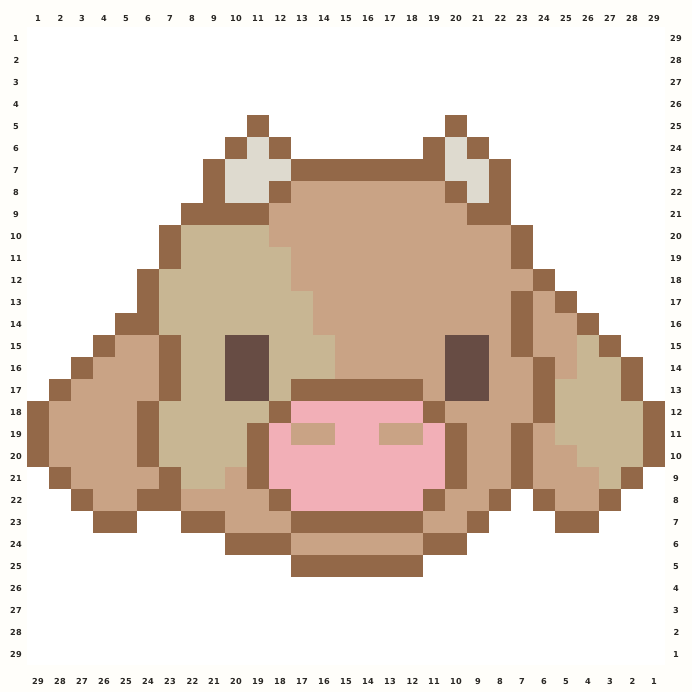
A broad cute cow face uses layered tan patches, pointed ears, a dark outline and a centered pink muzzle.
Edit this pattern online and export a PNG or print-ready PDF for free.
Perler palette · codes hidden · closest screen-color matches
Beige cells are empty pegs; white cells are beads. Brand codes use the closest CIE76 screen-color match from this source palette. Check important shades against physical beads before building.
Perler bead material list
Exact per-color counts for the 29×29 grid, so you can sort cups before you start. Switch the brand above to remap codes, colors and totals on this page.
- Light Brown
P21112 beads - Toasted Marshmallow
P20810 beads - Fawn
P205230 beads - Brown
P1212 beads - Flamingo
P20332 beads
Making notes
The cow reaches the full 29-column width, so the four blank top and bottom rows are the only normalization space. Build the unequal side patches around the tan face, then center the pink muzzle without mirroring either cheek.
This page gives makers a cute cow Perler bead pattern with a broad face, ears, dark patches and a pink muzzle. The 29×29 square keeps the large silhouette readable at thumbnail size and uses a single standard board without cropping the public edge-to-edge width.
Place the ears and forehead outline first, then fill the tan face from the crown toward the cheeks. Add the dark irregular patches, complete the broad lower face, and finish the pink muzzle and small inner highlights after both side contours align. The cow touches both horizontal edges and its two dark patches are deliberately unequal. Preserve the four blank rows above and below, keep the ear bridges attached to the crown, and count the pink muzzle rows separately from the surrounding light tan field rather than mirroring one cheek.
Pattern layout and bead count
The public active area spans the full 29 columns and 21 rows, with 396 occupied cells. I add four blank rows above and four below to retain a 29×29 square; no horizontal edge is cropped and one standard board is sufficient. Checkpoints: Rows 5–8: preserve both ear peaks, the connected crown and the first dark forehead patch while the four top padding rows stay empty. Rows 9–14: compare the unequal side patches and broad tan cheek spans; the face must keep its full 29-column reach. Rows 15–21: verify the dark patch edges, pink muzzle entry and the lower cheek contour without making the sides symmetrical. Rows 22–25: retain the final dark baseline and leave rows 26–29 blank as documented bottom normalization padding.
Ways to customize this pattern
A black-and-white dairy version, russet farm version or pastel nursery version can all use the same matrix. Keep both tan patch shapes unequal and leave the pink muzzle distinct; names and barn lettering belong on a backing panel.
Light Tan Face accounts for 155 beads, Brown Outline 112, Warm Tan Patch 75, Pink Muzzle 32, Dark Patch 12 and Toasted Highlight ten. Keep the dark contour deeper than both tan values and preserve the muzzle as a separate warm accent when switching Brands.
Print and iron checklist
The 29-cell face contains a large tan field next to thin ears, patch corners and a wide pink muzzle. Fuse the ear tips and patch edges lightly first, warm the center evenly, and cool the square flat so the long lower outline does not bow. Before export, verify the 29×29 coordinates, 396-bead total and the selected brand’s merged color counts against the on-page material list.
Project ideas for Cute Lil Cow
Cute Lil Cow works as a farm-classroom sign, nursery plaque, barn-party favor, fridge magnet or livestock lesson tile. Mount adhesive behind the solid forehead or central cheek area, not through the ear corners or pink muzzle, and keep names outside the chart.
The source grid uses a and the other design symbols only as internal color roles. The interactive chart replaces them with the selected manufacturer codes, while its material list combines any roles that map to the same bead color.