Vehicles · reference rebuild
Train Perler Bead Pattern
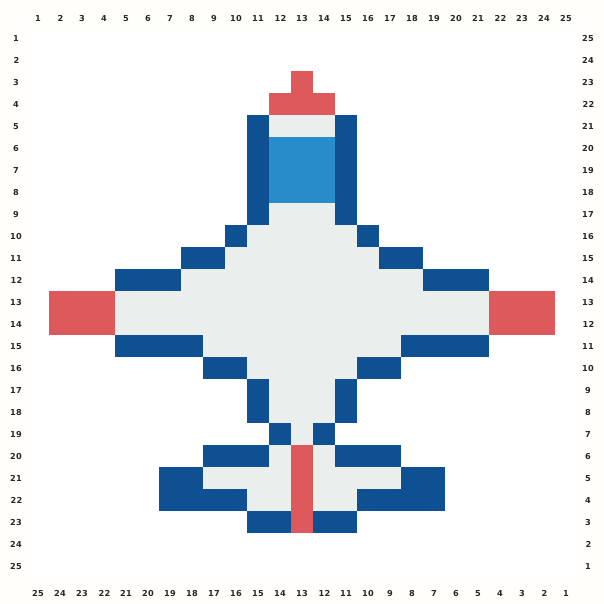
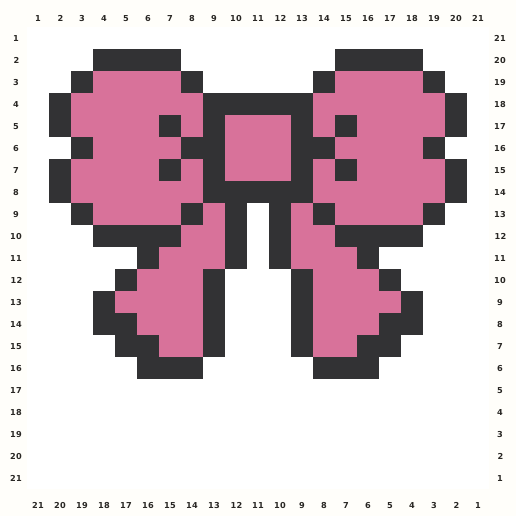
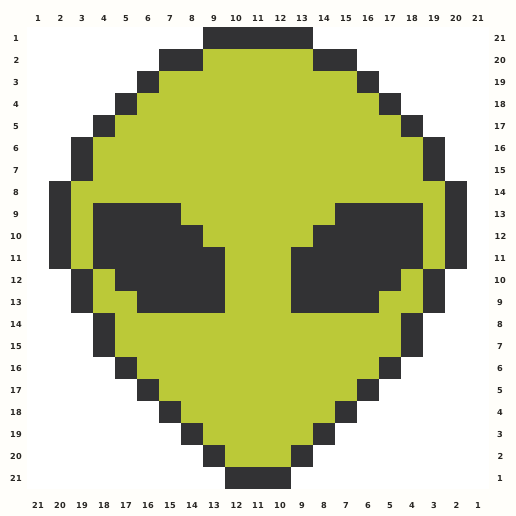
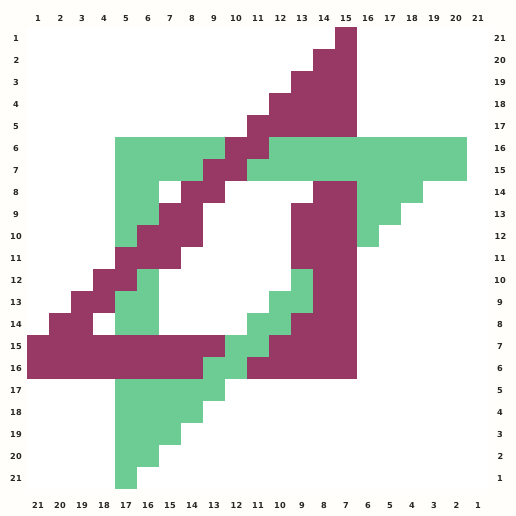
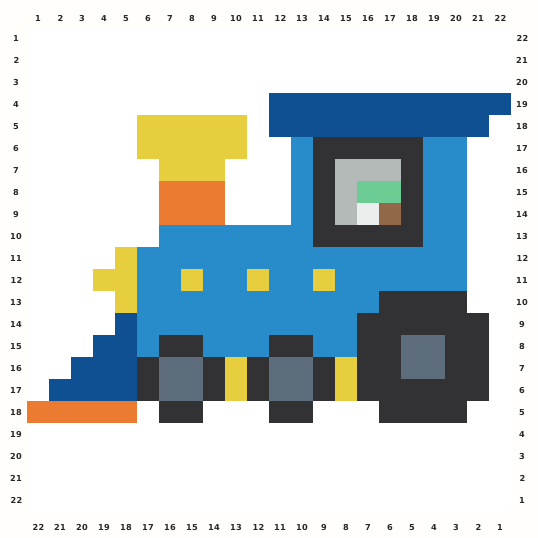
A cheerful locomotive packs a blue engine, dark wheels, yellow trim, a tiny window and multicolor carriage details into a centered square chart.
Edit this pattern online and export a PNG or print-ready PDF for free.
Perler palette · codes hidden · closest screen-color matches
Beige cells are empty pegs; white cells are beads. Brand codes use the closest CIE76 screen-color match from this source palette. Check important shades against physical beads before building.
Perler bead material list
Exact per-color counts for the 22×22 grid, so you can sort cups before you start. Switch the brand above to remap codes, colors and totals on this page.
- Dark Blue
P0831 beads - Yellow
P0324 beads - Light Blue
P0975 beads - Black
P1860 beads - Light Grey
P1815 beads - Orange
P0411 beads - Pastel Green
P532 beads - White
P011 beads - Light Brown
P211 beads - Slate Blue
P25212 beads
Making notes
Keep the three blank top rows and four blank bottom rows around the 22×15 locomotive. Stabilize the blue chassis first, then add the ten-role roof, window, trim and wheel details so the chimney and coupling stay attached.
Makers looking for a train Perler bead pattern need a recognizable locomotive with wheels, a cab and a front engine, not a generic block. This 22×22 reconstruction preserves the short rail silhouette, ten-color detail sort and 222 occupied cells for editing, classroom transport projects and print export.
Place the blue B boiler and long lower frame first, then add the dark k roof, cab and wheels. Build the yellow I trim from the front toward the rear, set the N smoke-stack and roof accents, and finish the tiny window, grey fittings and brown coupling cells after the chassis is level. The active source is 22 columns wide by 15 rows high, centered with three blank rows above and four below. Keep the raised N roof line, the five-cell front wheel group, the repeated vertical carriage marks and the one-cell rear coupling aligned; the small g, Q, f and b accents are occupied beads.
Pattern layout and bead count
The cropped active locomotive is 22×15. It is centered in a 22×22 square with three blank rows above and four below; no cell is scaled, mirrored or removed. The 222-bead design fits one standard 29×29 board, with the vertical padding retained in coordinates and exports. Checkpoints: Rows 1–3: keep the three blank top rows clear before placing the N roof and smoke-stack at row 4. Rows 4–10: verify the raised cab, I trim, tiny f window and Q fitting while the blue chassis expands toward the front. Rows 11–18: count the five fullest vertical columns and the dark wheel groups; row 17 reaches 20 occupied cells. Rows 19–22: leave four blank bottom rows and reconcile all 222 cells across the ten mapped color roles.
Ways to customize this pattern
Give the locomotive a red, green or sunset livery by changing B and I, while leaving the k wheels, N roof and tiny f window distinct. Preserve the chassis length before adding any separate track backing.
Blue B is the main 75-cell body, charcoal k provides 60 structure and wheels, navy N 31 roof/smoke cells, yellow I 24 trim, slate A 12 fittings, orange O 11 accents, light grey g 5 cells, mint Q 2 details, pale f 1 window highlight and brown b 1 coupling bead. Keep all ten roles separate for faithful material rows.
Print and iron checklist
The 222-cell train mixes a heavy B chassis with thin roof, wheel and chimney projections. Fuse the lower frame first, work from the cab toward the front, and touch the yellow trim and small window only after the blue mass is stable. Cool on a flat surface to prevent wheel rows from bowing. Before export, verify the 22×22 coordinates, 222-bead total and the selected brand’s merged color counts against the on-page material list.
Project ideas for Train
Use the train as a nursery transport tile, railway-unit worksheet, birthday banner car or repeated station sign. Back the broad chassis before attaching hardware, and keep the chimney and coupling away from holes. For a new livery, recolor B or I while retaining the dark wheel rhythm and ten-role details.
The source grid uses B and the other design symbols only as internal color roles. The interactive chart replaces them with the selected manufacturer codes, while its material list combines any roles that map to the same bead color.